
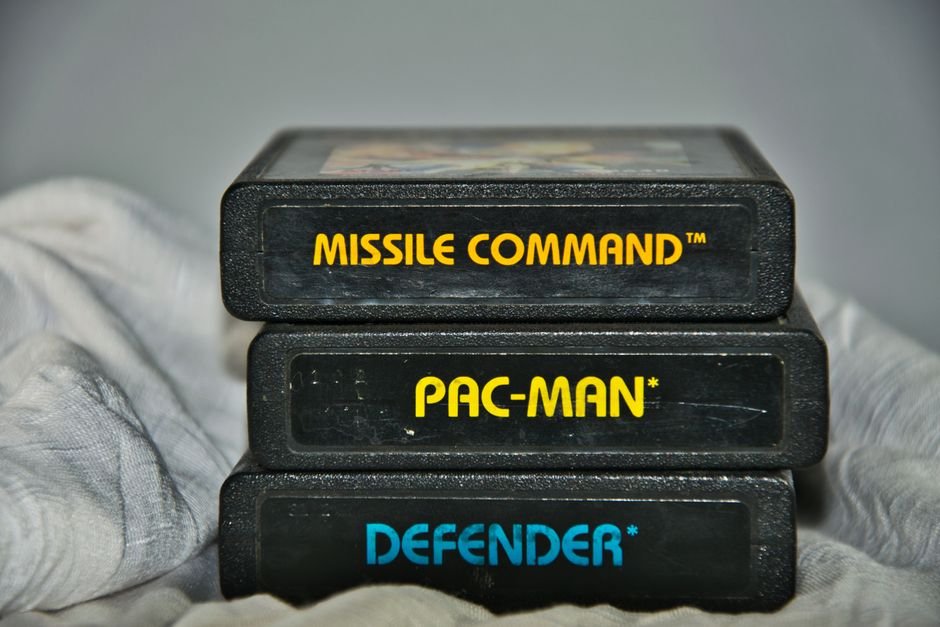
In short: Atari revolutionized gaming with hits like Pong and the 2600 but collapsed due to market saturation, poor quality control, and corporate mismanagement. Its downfall triggered the 1983 crash, offering timeless lessons on innovation cycles and brand stewardship in volatile industries.
The Arcade Revolution That Nobody Saw Coming
In 1971, two engineers installed a computer inside a wooden cabinet and called it “Computer Space.” The world’s first arcade game flopped spectacularly – its controls were too complex, its space theme too niche. Yet within this failure lay the DNA of a revolution. Nolan Bushnell and Ted Dabney would scrap everything but the cabinet itself, creating Atari and birthing an industry where none existed.
Pong’s 1972 debut changed entertainment forever. The simple tennis simulator grossed $40/week per machine – 4x the earnings of pinball tables. By 1973, Atari couldn’t build cabinets fast enough to meet demand from bars and bowling alleys. Their secret? Designing for non-gamers. Where Computer Space required memorizing controls, Pong used intuitive knobs anyone could understand. This focus on accessibility became Atari’s hallmark, later defining their home console strategy.
The 2600 and the Golden Age
Atari’s 1977 VCS (later renamed 2600) didn’t invent home gaming – Magnavox’s Odyssey came first. But like Pong before it, the 2600 succeeded through simplicity. Cartridges allowed infinite games on one device, while competitors sold dedicated consoles. Atari priced it at $199 ($940 today), sacrificing margins to build market share. The gamble worked: by 1980, the 2600 dominated 75% of the $2B gaming market.
Key to this dominance was developer talent. Atari’s Sunnyvale campus became the Silicon Valley of gaming, attracting engineers like Steve Jobs (who worked on Breakout) and dozens of MIT grads. Unlike today’s structured studios, Atari operated like a startup – programmers had near-total creative freedom, leading to classics like Adventure and Yar’s Revenge. But this culture sowed the seeds of later problems. When Warner Communications bought Atari in 1976 for $28M, clashes emerged between the freewheeling engineers and corporate management.
The Turning Point: When Growth Became the Enemy
1982 should have been Atari’s triumph. The 2600 sold 8M units, and the company accounted for 70% of Warner’s profits. Instead, it marked the beginning of the end. Three catastrophic decisions emerged from this success:
1. The Talent Exodus – Atari’s star developers, frustrated by Warner’s refusal to give them royalties, left to form Activision – the first third-party publisher. Atari sued but lost, opening the floodgates for competitors.
2. Quality Collapse – To meet holiday demand, Atari rushed unfinished games to market. A single programmer got just 5 weeks to develop E.T., resulting in what’s considered the worst game ever made. Millions of unsold cartridges were famously buried in a New Mexico landfill.
3. Market Saturation – By 1983, over 30 companies made Atari-compatible games, many of them shovelware. Retailers, stuck with unsellable inventory, slashed prices. Consumer trust evaporated almost overnight.
The Crash and Corporate Dismemberment
The 1983 crash saw gaming revenues plummet from $3.2B to $100M in 18 months. Atari posted a $536M loss – then the largest in corporate history. Warner panicked, splitting Atari into three pieces:
– Arcade Division (sold to Namco) – Kept the “Atari Games” name but lost rights to the classic logo
– Consumer Division – Sold to Commodore founder Jack Tramiel for just $240M
– Intellectual Property – Scattered across multiple owners through bankruptcy proceedings
This fragmentation doomed any recovery. Tramiel’s Atari Corp. pivoted to computers but never regained dominance. The brand became a zombie – licensed for nostalgia projects but stripped of its innovative core.
The Lesson: Dominance Demands Constant Reinvention
Atari’s story isn’t about failure – it’s about the lifecycle of market creation. The company excelled at pioneering but couldn’t transition to stewardship. Key takeaways for modern businesses:
1. Protect Your Talent – Losing its star developers cost Atari its creative edge. Today’s tech firms use equity and creative autonomy to retain innovators.
2. Quality Over Hype – The E.T. debacle proved that brand power has limits. Even children recognized bad products, destroying trust permanently.
3. Own Your Ecosystem – Atari let third parties flood the market. Compare this to Nintendo’s strict licensing model that saved gaming post-crash.
Most importantly, Atari teaches that no market position is permanent. The same factors that built the empire – accessibility, hardware innovation, cultural relevance – must be perpetually renewed. When gaming rebounded in 1985, it was Nintendo holding the controller. The player had changed, but the game continued.
Frequently Asked Questions
What caused Atari’s downfall?
Atari’s collapse stemmed from three factors: flooding the market with low-quality games like E.T., losing key talent to competitors, and Warner Communications’ short-term profit focus over innovation.
How did Atari impact the gaming industry?
Atari created the home console market and arcade culture with Pong (1972) and the 2600 (1977), peaking at $2B revenue before triggering the 1983 crash that reset the entire industry.
Who owns Atari today?
French publisher Atari SA holds the brand after acquiring it from Hasbro in 2001. The original company fragmented in 1984, with arcade rights now belonging to Warner Bros.
What lesson does Atari’s story teach?
Atari proves that market dominance requires constant innovation and quality control. Success today guarantees nothing tomorrow – especially in tech-driven entertainment markets.