
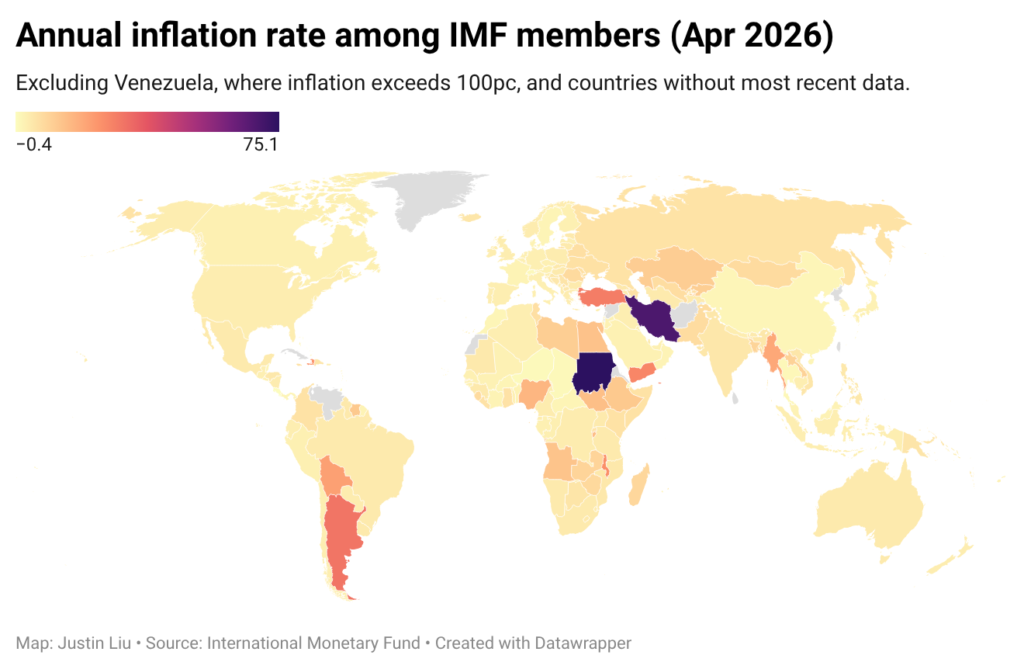
In short: Inflation is a steady increase in the average price of goods and services that reduces what each dollar can buy—a silent erosion of purchasing power that affects savers, workers, and investors differently. Understanding inflation’s mechanics and taking deliberate action to protect your wealth through strategic asset allocation, debt management, and income growth is the only reliable defense against this hidden tax.
The Paradox Nobody Talks About: Your Money Is Losing Value While You Sleep
You can work harder, earn more, and still end up poorer—and the culprit is invisible. Every time the average price of goods and services rises across an economy, your purchasing power declines. This is inflation, and it operates like a tax that no government legislates, no politician announces, and no one can fully escape. The cruel irony is that the harder you work to accumulate money, the more inflation punishes you for holding it in cash.
In economics, inflation is defined as an increase in the average price of goods and services in terms of money. This increase is measured using a price index, most commonly the Consumer Price Index (CPI). When the general price level rises, each unit of currency—each dollar in your wallet—buys fewer goods and services. Consequently, inflation corresponds to a direct reduction in the purchasing power of money. If inflation runs at three percent annually and your savings account earns zero percent, you are mathematically losing three percent of your wealth every year, regardless of how diligently you saved.
The opposite of inflation is deflation, a decrease in the general price level of goods and services. While deflation sounds beneficial—lower prices—it is actually economically destructive. Deflation encourages people to hoard cash and delay purchases, strangling economic activity. Most economists today favor a low and steady rate of inflation over deflation or zero inflation, because moderate inflation reduces unemployment, encourages productive investment, and gives central banks the policy tools they need to stabilize the economy during crises.
But here is what matters to you: understanding inflation is not academic. It is the difference between a retirement plan that works and one that fails. It is the difference between building wealth and slowly watching it evaporate. The common measure of inflation is the inflation rate—the annualized percentage change in a general price index. If you ignore this number, you ignore the single largest threat to your financial independence.
How Inflation Silently Rises: The Mechanics of Money Losing Value
Inflation does not happen by accident. It has causes, and understanding those causes is your first step toward defending yourself. Changes in inflation are widely attributed to several key drivers, each of which can push prices higher and reduce your purchasing power.
The first major cause is an increase in the money supply. When a central bank creates more money without a corresponding increase in the goods and services available to buy, each unit of money becomes worth less. Imagine a small town with one hundred dollars and one hundred loaves of bread. Each dollar buys one loaf. Now imagine the central bank doubles the money supply to two hundred dollars, but there are still only one hundred loaves of bread. Each dollar now buys half a loaf. Prices double. This is inflation in its purest form. Central banks adjust the money supply through various tools, and when they add too much money to the economy too quickly, inflation accelerates.
The second cause is demand shocks—sudden changes in real demand for goods and services. These can result from changes in fiscal policy (government spending and taxation), monetary policy (interest rates and money creation), or shifts in consumer behavior. If the government suddenly puts more money in people’s pockets through stimulus payments or tax cuts, and people rush to spend that money, demand for goods and services spikes. If supply cannot keep up, prices rise. This is demand-pull inflation: too much money chasing too few goods.
The third cause is supply shocks—significant decreases in available supplies of critical goods. Energy crises are the classic example. When oil production drops due to geopolitical conflict, natural disaster, or policy changes, the price of oil rises. Since oil affects transportation, heating, electricity, and manufacturing, higher oil prices ripple through the entire economy, pushing up prices for nearly everything. During the 1970s, OPEC oil embargoes created severe supply shocks that triggered stagflation—simultaneous inflation and economic stagnation—across developed economies. Consumers saw prices soar while their incomes stagnated and unemployment rose.
The fourth cause is significant decreases in interest rates set by the central bank. Lower interest rates make borrowing cheaper, which encourages businesses to invest and consumers to borrow and spend. This increased spending can outpace supply, driving prices up. Additionally, lower interest rates reduce the reward for saving, so people are incentivized to spend rather than hold cash. All of this increases demand and can fuel inflation.
The fifth cause is changes in inflation expectations, which can become self-fulfilling. If workers expect prices to rise, they demand higher wages. If businesses expect inflation, they raise prices preemptively. If savers expect the value of money to fall, they rush to convert cash into real assets. All of these behaviors actually cause inflation to rise, even if the underlying economic conditions do not warrant it. Inflation expectations are powerful precisely because people’s beliefs about future prices influence their present behavior.
The result is that inflation is not a single force—it is a combination of monetary, fiscal, and supply-side factors all working together. For you as an individual, the mechanism matters less than the outcome: your money buys less, and your wealth erodes unless you take deliberate action.
The Peak: When Inflation Becomes Visible and Painful
For years, inflation can run at moderate levels—two to three percent annually—and most people do not notice. Your salary increases a little, prices creep up a little, and life continues. But when inflation accelerates beyond moderate levels, it becomes impossible to ignore. You notice it at the grocery store, at the gas pump, and in your rent or mortgage payments. This is when inflation shifts from an abstract economic concept to a tangible threat to your standard of living.
Moderate inflation affects economies in both positive and negative ways. The positive effects include reducing unemployment due to nominal wage rigidity—workers’ wages do not fall easily, so moderate inflation helps employers adjust real wages downward without cutting nominal pay, making it easier to maintain employment levels. Moderate inflation also allows the central bank greater freedom in carrying out monetary policy, encourages loans and investment instead of money hoarding, and avoids the inefficiencies associated with deflation. A business owner is more willing to borrow money to expand operations if inflation is moderate, because they know they can repay the loan with money that is worth less than it is today. This encourages productive investment and economic growth.
But when inflation becomes rapid—double digits or higher—the negative effects dominate. Rapid inflation increases the opportunity cost of holding money. If your money is losing value at ten percent per year, you face enormous pressure to spend it or invest it immediately, rather than save it. This creates economic uncertainty. Savers are punished. Fixed-income retirees see their purchasing power collapse. Contracts become harder to negotiate because nobody knows what prices will be in six months.
Rapid inflation also creates uncertainty over future inflation, which discourages investment and savings. If you do not know whether inflation will be five percent or twenty percent next year, you are reluctant to lock in long-term investments or sign long-term contracts. Businesses delay expansion plans. Investors demand higher returns to compensate for inflation risk. The entire economy becomes less efficient.
Most destructively, if inflation becomes rapid enough, consumers begin hoarding goods out of concern that prices will increase in the future. Shelves empty. Shortages develop. The economy spirals toward breakdown. This is not theoretical—it has happened repeatedly throughout history, from Zimbabwe’s hyperinflation in the 2000s to Venezuela’s currency collapse in the 2010s.
For the average person, the peak of inflation is when you realize that your paycheck no longer stretches as far as it used to. Your rent consumes a larger percentage of your income. Groceries cost more. You have to make harder choices about what to buy and what to skip. This is when inflation stops being an economic statistic and becomes your personal financial crisis. The question shifts from “What is inflation?” to “How do I survive it?”
The Turning Point: Why Central Banks Fight Inflation and How They Do It
When inflation becomes too high, central banks act. The task of keeping the rate of inflation low and stable is usually given to central banks that control monetary policy, normally through the setting of interest rates and by carrying out open market operations. The Federal Reserve in the United States, the European Central Bank, the Bank of England, and other major central banks all have inflation control as a core mandate.
The primary tool is raising interest rates. When the central bank raises rates, borrowing becomes more expensive. A business that could borrow at three percent to expand now faces a seven percent rate and reconsiders. A consumer who could borrow at four percent for a car loan now faces eight percent and decides to wait. As borrowing becomes more expensive, spending decreases. Demand falls. Prices stabilize. This is the mechanism: higher rates reduce demand, which reduces inflation.
The secondary tool is open market operations—the central bank buys and sells government securities to adjust the money supply. When inflation is high, the central bank sells securities, which removes money from the financial system. Less money in circulation means less demand, which means lower prices. These operations work in tandem with interest rate policy to cool the economy and bring inflation back down.
The challenge for central banks is that these tools work with a lag. It takes months or years for higher interest rates to fully reduce inflation. During that lag period, inflation can overshoot. Additionally, raising interest rates causes economic pain—unemployment rises, growth slows, asset prices fall. Central banks face intense political pressure to stop raising rates and ease policy. But if they cave to that pressure too early, inflation will re-accelerate. This is why central bank independence is so important. If politicians could control the central bank directly, they would always choose to lower rates and boost the economy in the short term, even if it meant higher inflation in the long term.
The turning point comes when the central bank’s actions finally work. Inflation begins to fall. Growth begins to stabilize. Asset prices stop collapsing. This is when the economy transitions from fighting inflation to managing the aftermath. For individuals, this is when you can finally breathe—but also when you must assess the damage and rebuild.
The Aftermath: What Inflation Takes and What You Can Do About It
Inflation has winners and losers. Understanding which category you fall into is essential to protecting yourself.
Inflation is devastating for savers who hold cash. If you have one hundred thousand dollars in a savings account earning zero percent interest, and inflation runs at three percent annually, you lose three thousand dollars of purchasing power every year. After ten years, your one hundred thousand dollars has the purchasing power of approximately seventy-four thousand dollars. You did not lose the money—it is still in your account—but it buys less. This is why financial advisors warn against holding large amounts of cash in low-yield savings accounts. Inflation slowly steals your wealth.
Inflation is also difficult for people on fixed incomes. Retirees living on a fixed pension, for example, see their purchasing power decline every year. If your pension is ten thousand dollars per month and inflation runs at three percent annually, your purchasing power falls by three hundred dollars per month in real terms. After ten years, you have lost roughly thirty-three percent of your purchasing power. This is why inflation-adjusted pensions and Social Security cost-of-living adjustments (COLA) are so important—they protect retirees from inflation erosion.
Inflation, however, is beneficial for borrowers with fixed-rate debt. If you borrowed one hundred thousand dollars at a three percent fixed rate, and inflation rises to five percent, you are repaying the loan with money that is worth less than when you borrowed it. The real value of your debt declines. This is why borrowing before inflation spikes—and locking in fixed rates—can be a wealth-building strategy. Business owners and real estate investors who borrowed heavily before inflation accelerated often emerged wealthier than those who played it safe and held cash.
Inflation is also generally positive for workers whose wages keep pace with inflation. If your salary increases by five percent annually and inflation is also five percent, your purchasing power remains stable. You are not getting richer, but you are not getting poorer either. The key is that your income must keep pace with inflation. Workers in weak bargaining positions, or those in fields where wage growth lags inflation, fall behind.
Inflation is positive for owners of real assets—real estate, commodities, stocks, and businesses. These assets often appreciate during inflation because their underlying value is tied to real goods and services, not to currency. A house is worth more when prices rise. Oil, wheat, and metals become more valuable. Stocks represent ownership of businesses that can raise prices and maintain profitability. During inflationary periods, real asset owners often outpace inflation, while cash holders fall behind.
So what can you do? The lesson is clear: do not hold large amounts of cash. Diversify into real assets. If you have debt at a fixed rate below the inflation rate, carry that debt—it is working in your favor. Invest in stocks, real estate, and other productive assets that can appreciate during inflation. Negotiate for wage increases that keep pace with inflation. Build skills that make you valuable in any economic environment. Most importantly, understand that inflation is not random or uncontrollable—it is a predictable economic force that you can prepare for and profit from if you understand how it works.
The Practical Lesson: Building Wealth in an Inflationary World
The real story of inflation is not about fear or victimhood. It is about understanding the rules of the game and playing accordingly. Most economists today favor a low and steady rate of inflation—typically around two percent annually—because this rate balances the benefits of inflation against the costs. Low inflation reduces the likelihood of economic recessions by enabling the labor market to adjust more quickly. It reduces the risk that a liquidity trap prevents monetary policy from stabilizing the economy during crises. And it avoids the costs associated with high inflation or deflation. Central banks around the world target this two percent rate because they understand that some inflation is healthy, but too much is destructive.
For you, the practical lesson is this: accept that inflation will happen, plan for it, and position yourself to benefit from it rather than be harmed by it. Start by auditing your financial position. How much cash are you holding? How much of your wealth is in real assets? How much is in fixed-income investments? If you have significant cash holdings earning near-zero interest, you are losing money to inflation every single day. Move some of that money into dividend-paying stocks, real estate investment trusts (REITs), or direct real estate ownership. These assets have historically outpaced inflation over long periods.
Second, examine your debt. Do you have fixed-rate debt? At what rate? If you have a mortgage at three percent and inflation is running at four percent, you are winning—your debt is becoming cheaper in real terms. If you are considering taking on debt, do it before inflation accelerates, and lock in the lowest rate possible. Conversely, if you have variable-rate debt, prioritize paying it down because your interest rate will rise as the central bank tightens policy.
Third, focus on income growth. Your salary is your most powerful wealth-building tool, especially early in your career. Inflation erodes the purchasing power of fixed salaries, so you must negotiate raises regularly and move to higher-paying roles when possible. Develop skills that are valuable in any economic environment. Build a side business or investment income stream that can grow faster than inflation. The wealthiest individuals do not accumulate wealth through savings alone—they build it through income growth and strategic asset allocation.
Fourth, educate yourself about inflation indicators. Watch the Consumer Price Index (CPI) reports. Understand what is driving inflation—is it money supply growth, demand shocks, or supply shocks? Different causes require different responses. If inflation is driven by supply shocks (energy crises, production disruptions), investing in energy and commodities may be prudent. If it is driven by monetary expansion, real assets an
Frequently Asked Questions
What is inflation and how does it affect me?
Inflation is the increase in average prices of goods and services, measured by the Consumer Price Index (CPI). When inflation rises, each dollar you hold buys fewer goods and services, directly reducing your purchasing power and the real value of your savings.
Is all inflation bad?
No. Economists generally favor low, steady inflation (typically 2 percent annually) because it encourages spending and investment over hoarding money, helps reduce unemployment, and gives central banks flexibility to manage the economy. High or unpredictable inflation, however, is destructive.
What causes inflation?
Inflation results from increases in the money supply, demand shocks (changes in fiscal or monetary policy), supply shocks (energy crises, production disruptions), lower interest rates, or shifts in inflation expectations. Often multiple factors work together.
How can I protect my money from inflation?
Strategies include investing in assets that historically outpace inflation (stocks, real estate, commodities), holding debt that becomes easier to repay as inflation rises, increasing your income faster than inflation erodes it, and avoiding holding large amounts of cash in low-yield accounts.