
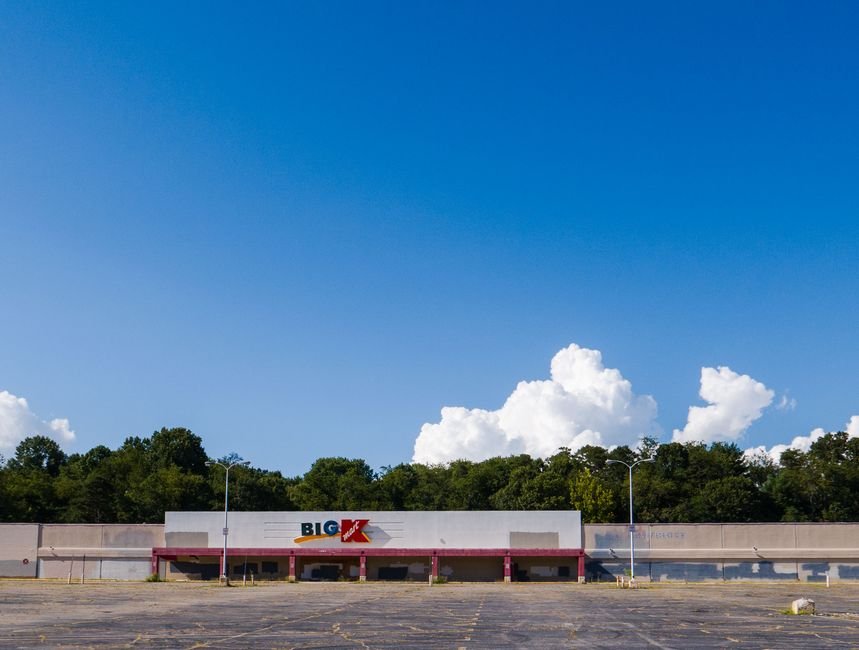
In short: Kmart dominated retail in the 1980s and early 1990s with 2,486 stores worldwide, but failed to adapt to changing consumer behavior, e-commerce, and big-box competition. The company filed for bankruptcy in 2002, merged with Sears in 2005, and closed its last mainland U.S. store in 2024—a 22-year decline from peak dominance.
The Paradox of Dominance: When Size Becomes a Liability
Kmart owned the American retail landscape in 1994 with 2,486 stores spanning the globe—yet within three decades, it would cease to exist as a meaningful business. This is not a story of sudden collapse or a single catastrophic decision. It is the story of a company that built an empire on a model that worked perfectly for its era, then watched helplessly as the era ended.
The paradox cuts deeper: Kmart’s greatest strength—its massive store network and discount positioning—became its greatest vulnerability. The company that had revolutionized American retail by bringing affordable goods to small towns and suburbs found itself trapped by the very infrastructure that once made it invincible. When the retail landscape shifted beneath its feet, Kmart discovered that size and legacy are not the same as adaptability and vision.
This is not merely a cautionary tale about a failed retailer. It is a masterclass in how market dominance creates blind spots, how organizational inertia defeats innovation, and how the companies that refuse to cannibalize their own business models are eventually cannibalized by the market itself. Kmart’s 125-year journey from S. S. Kresge Corporation to near-extinction reveals the mechanics of empire collapse—and the universal principles that apply to any dominant business facing disruption.
The Rise: How Kmart Built an Unstoppable Retail Machine
Kmart’s origins trace back to 1899, when S. S. Kresge Corporation was incorporated as a five-and-dime store operator. For decades, it occupied a specific and profitable niche: serving middle and working-class Americans with affordable merchandise in small-town America. The company understood its customer and its geography in ways that larger, urban-focused retailers did not.
The real transformation came in the 1960s and 1970s, when Kmart evolved from a five-and-dime operator into a discount department store powerhouse. The company pioneered the “big-box” retail model in many markets, offering a vast selection of goods under one roof at prices that undercut traditional department stores. This was revolutionary. Families could buy clothing, appliances, electronics, housewares, and groceries all in one trip, all at prices they could afford.
By the 1980s and into the early 1990s, Kmart had become one of the largest retailers on Earth. The company’s logistics network was impressive for its time. Its supply chain, while not cutting-edge, was efficient enough to maintain profitability across thousands of locations. Store managers had genuine autonomy. The company culture emphasized serving small-town and suburban America—the demographic that traditional retailers had largely abandoned.
Kmart’s peak in 1994 represented the zenith of this model: 2,486 stores worldwide, a household name, and a business that seemed permanent. The company had trained an entire generation of Americans to think of Kmart as their destination for affordable everyday goods. This was not just market share; it was cultural penetration. Kmart had become part of the American retail fabric.
The company’s success was built on three pillars: first, a relentless focus on low prices and high volume; second, geographic coverage in markets where competitors were weak; and third, operational efficiency that allowed the company to maintain margins despite aggressive pricing. For thirty years, this formula worked. For thirty years, it seemed unbeatable.
The Turning Point: When the Competitive Landscape Shifted
The slow decline began in the 1990s, though few recognized it at the time. The seeds of Kmart’s eventual collapse were not planted by a single competitor or a single strategic error. They were planted by multiple forces converging simultaneously—forces that Kmart’s leadership either did not see clearly or could not respond to quickly enough.
The first force was Walmart. While Kmart had been focused on serving small-town America, Walmart had been building a different kind of empire. Walmart’s supply chain was more sophisticated. Its logistics network was more efficient. Most critically, Walmart had invested heavily in technology and data systems that allowed it to optimize inventory in ways Kmart could not match. By the 1990s, Walmart was not just a competitor; it was a competitor with structural advantages that Kmart could not overcome through operational tweaks.
The second force was Target. Target did not compete on price alone. Instead, Target positioned itself as a discount retailer with style, with design sensibility, with a brand identity that appealed to younger, more affluent consumers. Target understood something that Kmart did not: the discount retail space was not monolithic. There was room for a discount retailer that was not just cheap, but also desirable. Kmart remained trapped in the “cheap” positioning, unable or unwilling to evolve its brand perception.
The third force was the rise of category killers and specialty retailers. Best Buy dominated electronics. Home Depot and Lowe’s dominated home improvement. Toys R Us (before its own collapse) dominated toys. These specialized retailers offered deeper selection and more expertise in their categories than Kmart could provide. Kmart’s advantage as a one-stop shop began to erode as consumers increasingly preferred specialists.
But these competitive pressures alone would not have destroyed Kmart. The company could have adapted, repositioned, and fought back. The real problem was that Kmart’s leadership did not recognize the severity of the threat until it was too late. The company’s massive store network, which had been an asset, became a liability. Each store required rent, staffing, and inventory investment. The company was locked into a high-fixed-cost model that made it difficult to pivot quickly or experiment with new retail formats.
By the late 1990s, Kmart’s market share was eroding. Profit margins were compressing. Store traffic was declining. The company was still profitable, still large, still seemingly secure—but the trajectory was unmistakable to those paying attention. The empire was beginning to crack.
The Fall: From Bankruptcy to Irrelevance
Kmart filed for Chapter 11 bankruptcy in 2002. This was not a sudden catastrophe; it was the inevitable conclusion of a decade-long decline that management had failed to arrest. The company had lost the pricing war to Walmart. It had lost the brand war to Target. It had lost category-specific competition to specialists. By 2002, Kmart was a company searching for a reason to exist.
The bankruptcy filing was supposed to be a reset—a chance to reorganize, close underperforming stores, and emerge as a leaner, more competitive business. In some ways, it worked. Kmart did emerge from bankruptcy. The company continued to operate. But the fundamental problems remained unsolved. Kmart was still a discount retailer with a tired brand. It was still stuck in a high-fixed-cost model. It was still losing to competitors that had either built superior operational systems or superior brand positioning.
Then came 2005 and the merger with Sears. This decision, made by Kmart’s leadership at the time, is often cited as a critical mistake. The logic was superficially sound: combine two struggling retailers to create a larger, more diversified company with greater negotiating power with suppliers. But the merger was a failure almost from the beginning. Sears was fighting its own battles against category killers and changing consumer preferences. The merger did not solve Kmart’s problems; it simply added Sears’ problems to the mix.
The combined entity, Sears Holdings Corporation, struggled throughout the 2000s and 2010s. Store closures accelerated. The company cycled through multiple CEOs and strategies, none of which reversed the fundamental decline. Kmart, once a name synonymous with American retail, became increasingly invisible. Younger consumers had never shopped at Kmart. Middle-aged consumers had long since switched to Walmart or Target. The company had no compelling reason for customers to visit.
The final blow came in 2018 when Sears Holdings Corporation filed for bankruptcy. Kmart, which had already been struggling as a subsidiary of Sears Holdings, was absorbed into Transform SR Brands LLC, a privately held company formed specifically to acquire assets from Sears Holdings. This was the final indignity: Kmart had gone from being an independent powerhouse to being a brand owned by a financial acquisition vehicle.
More closures followed. Store after store shut down. The company that had once operated 2,486 locations worldwide was reduced to dozens, then to a handful. In 2024, Kmart closed its last full-sized big-box store on the mainland United States. The empire, which had taken decades to build, had been dismantled in a span of twenty-two years.
As of 2026, only three Kmart locations remain: a big-box store in Charlotte Amalie in the US Virgin Islands, a big-box store in Tamuning in Guam, and a smaller location in Kendale Lakes, Florida. These are not remnants of a thriving business; they are artifacts of a dead one.
The Structural Failures: Why Kmart Could Not Adapt
Understanding Kmart’s collapse requires understanding not just what happened, but why the company could not respond effectively to the threats it faced. The answer lies in several structural and cultural failures that compounded over time.
First, Kmart’s supply chain and logistics infrastructure, while adequate for the 1970s and 1980s, was not competitive in the 1990s and 2000s. Walmart had invested heavily in technology, data systems, and logistics optimization. Kmart had not. The company’s inventory management was less efficient. Its ability to respond to sales data and adjust stock levels was slower. Its cost structure was higher. These were not insurmountable problems—they were solvable through investment and modernization. But solving them would have required significant capital expenditure and a willingness to cannibalize existing systems, both of which Kmart was reluctant to do.
Second, Kmart’s brand positioning was muddled. The company had built its empire on the promise of low prices, but by the 1990s, that promise was no longer credible. Walmart was cheaper. Target had better design and brand perception. Kmart occupied an uncomfortable middle ground—not the cheapest, not the most desirable, not the most specialized. The company lacked a clear answer to the question: why should a customer shop at Kmart instead of somewhere else?
Third, Kmart’s organizational culture was risk-averse and slow-moving. The company had been successful for so long that it had developed a culture of incremental improvement rather than radical innovation. Store managers had autonomy, which was good, but corporate leadership lacked the vision or urgency to push the company in fundamentally new directions. When threats emerged, the response was slow and half-hearted.
Fourth, Kmart failed to anticipate and adapt to the rise of e-commerce. While Amazon was still a small online bookseller in the late 1990s, the writing was on the wall: retail was going to change. Kmart did not invest early or aggressively in online capabilities. By the time the company recognized the e-commerce threat, it was too late to catch up. Amazon had already established itself as the default online retailer for millions of Americans.
Fifth, Kmart’s massive store network, which had been an asset, became a strategic trap. The company was locked into a high-fixed-cost model. Each store required rent, staffing, utilities, and inventory investment. This made it difficult to experiment with new retail formats or to pivot quickly when market conditions changed. A smaller, more agile competitor could try new things, fail, and adjust. Kmart had to justify every decision against its massive installed base of stores.
The Lesson: What Kmart’s Collapse Teaches About Business Resilience
Kmart’s story offers a clear and actionable lesson for any business leader or entrepreneur: dominance in your current market does not guarantee survival in the next market. The companies that succeed over decades are not those that optimize their existing business model to perfection. They are those that remain willing to question their fundamental assumptions and to cannibalize their own success when necessary.
The specific lesson from Kmart is this: when your competitive advantage is primarily structural—when you win because you have more stores, more capital, or more scale than competitors—you are vulnerable to competitors who have a different structural advantage or a fundamentally different business model. Kmart’s 2,486 stores in 1994 seemed like an unbeatable advantage. But Walmart’s superior supply chain and logistics proved more valuable. Target’s brand positioning proved more valuable. E-commerce proved more valuable. The lesson is that structural advantages are only valuable if they align with what customers actually want.
For modern business leaders, this translates into several concrete principles. First, stay close to your customers. Understand not just what they buy, but why they buy it and what alternatives they are considering. Kmart lost touch with its customers’ evolving preferences and did not recognize that the discount positioning alone was no longer sufficient.
Second, invest in capabilities that competitors cannot easily replicate. Walmart’s investment in supply chain technology and data systems was not flashy or exciting, but it created a structural advantage that Kmart could not overcome through operational tweaks. The lesson is that boring, unglamorous investments in core capabilities are often more valuable than flashy brand initiatives or store redesigns.
Third, be willing to cannibalize your own business model. If you recognize that the market is shifting, and that your current business model will not survive the shift, you must be willing to invest in new models even if it means cannibalizing your existing revenue. Kmart was not willing to do this. The company wanted to defend its existing store network rather than experiment with new retail formats or invest heavily in e-commerce. This reluctance to cannibalize ultimately led to the complete destruction of the business.
Fourth, recognize that size and scale, while valuable, are not sufficient. Kmart was large. It had resources. It had brand recognition. But it lacked the agility and the vision to adapt to fundamental market shifts. In the modern economy, where technological change and consumer preferences shift rapidly, agility and vision matter more than size.
Fifth, understand that your competitive advantages have expiration dates. The discount department store format was a genuine innovation in the 1960s and 1970s. It created enormous value and made Kmart a dominant business. But formats change. Customer preferences evolve. New competitors emerge with different models. The companies that survive are those that recognize when their advantages are eroding and take action before it is too late.
Kmart’s collapse was not inevitable. The company could have survived and thrived if it had made different choices. It could have invested more aggressively in supply chain technology. It could have positioned itself as a lifestyle brand rather than just a discount brand. It could have embraced e-commerce earlier and more completely. It could have been willing to close stores and experiment with smaller formats. None of these would have been easy. All of them would have required difficult choices and significant capital investment. But any of them could have changed the trajectory.
Instead, Kmart chose the path of least resistance. It defended its existing model. It made incremental improvements. It hoped that its scale and brand recognition would be enough. And it was not. By the time the company recognized the severity of the threat, the structural advantages that competitors had built were too great to overcome. Kmart became a case study not in how to build an empire, but in how to lose one.
Frequently Asked Questions
When did Kmart file for bankruptcy?
Kmart filed for Chapter 11 bankruptcy in 2002, marking the beginning of its formal legal decline. This came after years of losing market share to competitors like Walmart and Target throughout the 1990s.
Why did Kmart merge with Sears?
Kmart and Sears merged in 2005 to form Sears Holdings Corporation in an attempt to combine resources and compete against larger retailers. The merger ultimately failed to reverse either company’s decline.
How many Kmart stores remain today?
As of 2026, only three Kmart locations remain: one in Charlotte Amalie (US Virgin Islands), one in Tamuning (Guam), and one in Kendale Lakes (Florida). The last mainland U.S. store closed in 2024.
What caused Kmart’s decline in the 1990s?
Kmart failed to modernize its supply chain, lost pricing wars to Walmart, and couldn’t compete with Target’s brand strategy. The rise of e-commerce and changing retail preferences further accelerated its collapse.