
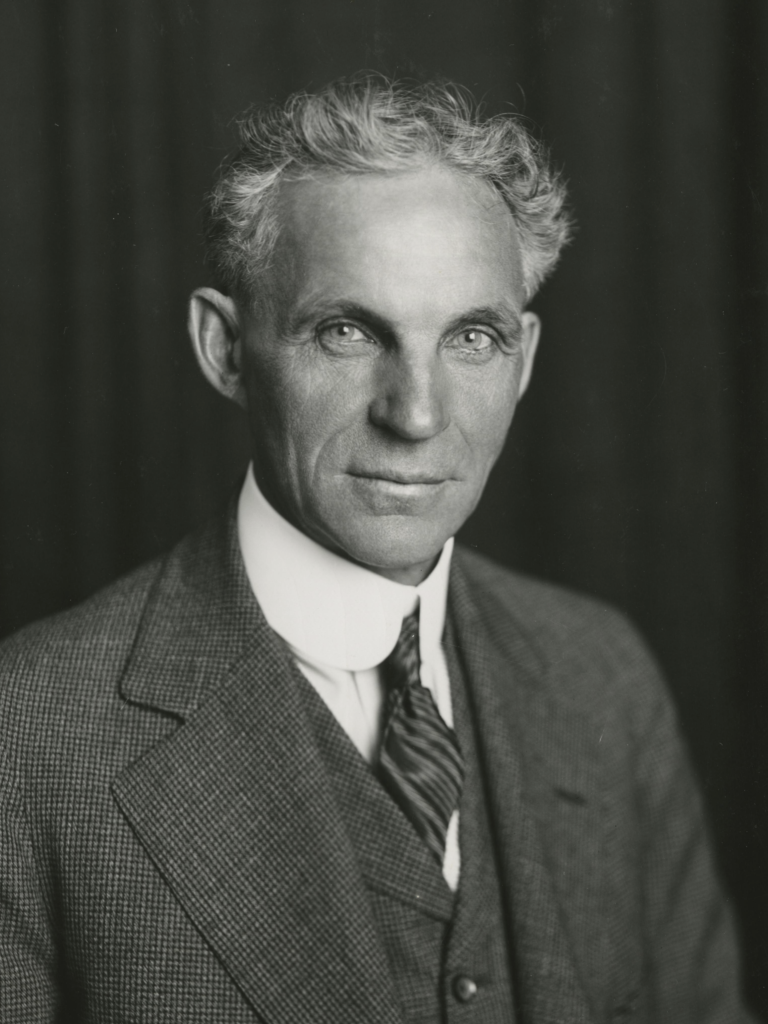
In short: Henry Ford built a revolutionary automobile empire by perfecting mass production, but his stubbornness—especially his resistance to new models and controversial personal beliefs—ultimately threatened the company’s future.
Rise: From Farmhouse to Founder

Henry Ford was born on July 30, 1863, in a modest farmhouse in Greenfield Township, Michigan, and left home at sixteen to seek work in Detroit. His early exposure to machinery came through repairing engines in the late 1880s and later employment with a division of Edison Electric during the 1890s. These experiences gave him a practical understanding of engines and a restless curiosity about self‑propelled vehicles.
Ford’s first attempts at building a car were modest. In 1896 he completed a gasoline‑powered quadricycle, a modest prototype that proved his engineering skill but failed commercially. Undeterred, he founded the Detroit Automobile Company in 1899, only to see it collapse within a year due to poor management and an inability to produce a marketable vehicle. A second effort, the Henry Ford Company, ended similarly in 1902 when investors dismissed his insistence on a low‑cost, high‑volume model.
These early failures taught Ford a crucial lesson: control. In 1903, with a modest $28,000 of capital from investors, he incorporated the Ford Motor Company, insisting on sole ownership of the design process. By securing patents—most notably a 1911 patent for the planetary transmission that would power the Model T—Ford positioned himself both as inventor and industrialist, laying the technical foundation for his future empire.
Peak: The Model T and the Birth of Fordism
The 1908 introduction of the Model T marked a turning point in American industry. Priced initially at $850, the car soon fell below $300 through systematic cost reductions. Ford achieved this by standardizing parts, introducing the moving assembly line in 1913, and enforcing a strict five‑day, eight‑hour workday that attracted a stable labor force. These innovations collectively defined “Fordism,” a production system that emphasized efficiency, low wages, and high output.
Ford’s business model extended beyond the factory floor. He established a nationwide franchise network, allowing independent dealers to sell his cars while maintaining strict pricing controls—a strategy that ensured uniformity and prevented discount wars. By the early 1920s, the Model T dominated the market, with annual production surpassing one million units. Ford’s wealth grew accordingly; as sole owner, he became one of the world’s richest individuals, and his influence reached into politics, labor relations, and even global peace advocacy.
Ford’s belief that affordable consumer goods could foster world peace led him to support the League of Nations and to promote the idea that a well‑fed, well‑clothed populace would be less prone to conflict. While idealistic, this vision reinforced his commitment to mass production as a social good, intertwining his corporate success with a broader humanitarian narrative.
Turning Point: Stubbornness Meets a Changing World

Despite the Model T’s dominance, the 1920s ushered in a new automotive landscape. Competitors such as General Motors introduced yearly model changes, offering consumers fresh designs and modern features. Ford, however, remained convinced that the Model T’s simplicity was its greatest asset. He resisted redesigns, arguing that any alteration would disrupt the efficiency of his assembly line and raise costs. This obstinacy allowed rivals to capture market share, and by 1925 the Model T’s sales were in decline.
At the same time, Ford’s personal convictions grew increasingly controversial. Through his newspaper, The Dearborn Independent, he published a series of antisemitic articles later compiled as “The International Jew.” These writings alienated many investors, strained relationships with the press, and drew the attention of government regulators. Moreover, his pacifist stance during World I and later opposition to U.S. entry into World II placed him at odds with prevailing public sentiment, further isolating him politically.
Ford’s reluctance to adapt extended to product development. In 1927 he finally introduced the Model A, but the delay cost the company dearly. The Model A, though successful, could not fully recoup the market share lost to more agile competitors. Ford’s stubborn adherence to outdated practices, combined with his polarizing public statements, created a perfect storm that threatened the very empire he had built.
Fall: The End of an Era
By the early 1930s, the Great Depression compounded Ford’s challenges. While his low‑wage policy had previously stabilized labor, the economic downturn forced the company to cut costs further, leading to layoffs and strained employee relations. Ford’s health also began to decline, limiting his ability to steer the company through the crisis.
The death of his son Edsel in 1943 removed a potential successor who might have balanced Ford’s rigidity with fresh ideas. In 1945, recognizing his own frailty, Ford transferred control of the company to his grandson, Henry Ford II. This transition marked the end of an era defined by a single, unyielding vision. Upon his death on April 7, 1947, Ford left the majority of his wealth to the Ford Foundation and retained family control of the corporation, but the company’s future now depended on leaders willing to evolve beyond his original doctrines.
Ford’s legacy is paradoxical. He democratized personal transportation and pioneered labor standards that still influence modern workplaces. Yet his inflexibility, combined with harmful public rhetoric, nearly dismantled the very institution he created. The Ford Motor Company survived, but only by shedding many of the founder’s most rigid policies and embracing continuous innovation.
Lesson: Adaptability Trumps Stubbornness
The real story of Henry Ford is a study in contrasts: visionary engineering paired with a refusal to let go of past successes. Modern entrepreneurs can draw a clear, actionable lesson: success demands both operational excellence and the humility to pivot when market conditions shift. Maintaining a relentless focus on efficiency is valuable, but it must be balanced with listening to customers, monitoring competitors, and reassessing internal beliefs.
For the reader, the practical takeaway is simple. When you have a proven product or process, commit to it only as long as it continues to meet market demands. Set regular review points—quarterly or annually—to assess whether your core offering still aligns with consumer expectations. If data shows a gap, allocate resources to iterate rather than cling to the status quo. By institutionalizing adaptability, you protect your business from the very kind of self‑sabotage that nearly destroyed Henry Ford’s empire.
Frequently Asked Questions
What was the key innovation that made the Model T affordable?
The Model T’s low price resulted from the moving assembly line, interchangeable parts, and a patented planetary transmission that streamlined manufacturing.
Why did Henry Ford resist new car designs in the 1920s?
Ford believed the Model T was sufficient, fearing that new models would raise costs and disrupt the efficiency of his proven production system.
How did Ford’s personal beliefs affect his business?
His antisemitic publications and isolationist politics created public backlash and strained relationships with investors and the government.
What lesson can modern leaders learn from Ford’s downfall?
Rigid adherence to past successes can blind leaders to market changes; continual adaptation is essential for sustainable growth.