
In short: Pan Am, the iconic U.S. international carrier, rose to global dominance through innovation and a worldwide route network, but a combination of deregulation, costly acquisitions, and operational setbacks led to a steady erosion of its financial base, culminating in bankruptcy and the airline’s disappearance in 1991.
Rise: From Mail‑Plane to Global Trailblazer
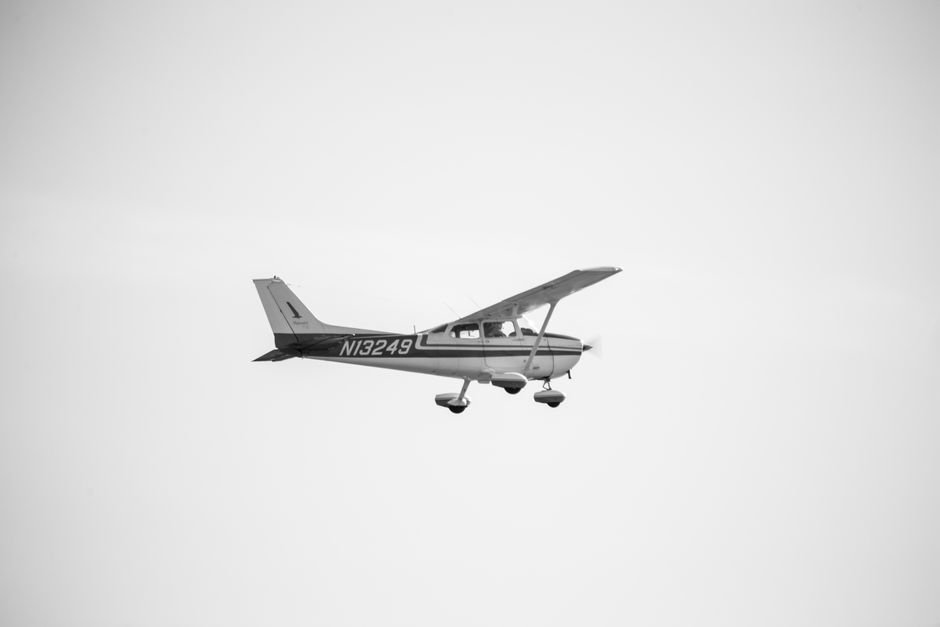
Pan American World Airways began in 1927 as a modest airmail service linking Key West, Florida, with Havana, Cuba. Founded by two U.S. Army Air Corps majors, the fledgling carrier quickly earned a reputation for reliability on a route that was, at the time, the only regular international air link between the United States and the Caribbean.
The true transformation began when Juan Trippe, an ambitious entrepreneur, took the helm in the early 1930s. Trippe’s vision was to turn Pan Am into a worldwide carrier, not merely a regional mail plane. He ordered a fleet of flying boats—most notably the Sikorsky S‑42 and later the massive Martin M‑130 “China Clipper”—which could land on water and thus bypass the scarcity of land airports in distant territories. By the late 1930s, Pan Am’s network stretched across Central and South America, and the airline secured the first U.S. government contracts for trans‑Atlantic and trans‑Pacific routes.
These early moves cemented Pan Am’s status as the unofficial flag carrier of the United States. While other nations operated state‑owned airlines, the United States relied on a private company to represent its interests abroad. Pan Am’s blue globe logo, later nicknamed “The Blue Meatball,” and the “Clipper” naming convention for its aircraft and call signs reinforced a sense of national prestige. The airline’s reputation for safety, punctuality, and luxury made it the airline of choice for diplomats, businessmen, and celebrities traveling long distances.
Peak: The Jet Age and the Worldport Era
By the late 1950s Pan Am had achieved a near‑monopoly on U.S. international routes. In 1958 the airline introduced the Boeing 707, the first American jetliner, marking the beginning of the Jet Age. The 707’s speed and range allowed Pan Am to cut travel times dramatically and to serve more distant markets with fewer stops. The airline’s commitment to technological leadership continued with the acquisition of the Boeing 747 in 1970, becoming the first U.S. carrier to operate the “Jumbo Jet.”
Pan Am’s flagship terminal, the Worldport at John F. Kennedy International Airport, opened in 1960. Designed as a futuristic “flying saucer” with multiple jet bridges, the Worldport became a symbol of modern air travel. In 1970 the airline carried 11 million passengers to 86 countries, touching every continent except Antarctica. As a founding member of the International Air Transport Association (IATA), Pan Am helped shape global aviation standards, from reservation systems to safety protocols.
The airline’s service model emphasized luxury. Passengers enjoyed spacious cabins, fine dining, and the iconic white pilot caps that signaled professionalism. Pan Am’s brand was so strong that, even after its demise, surveys in the early 1990s found its trademark to be the second‑most‑recognized worldwide, trailing only the Coca‑Cola logo.
Turning Point: Deregulation and Strategic Missteps
The first cracks appeared in the mid‑1970s. The Airline Deregulation Act of 1978 dismantled the protective framework that had kept domestic carriers separate from each other and from foreign competition. While deregulation spurred growth for many U.S. airlines, Pan Am struggled because its business model relied heavily on international routes that were now open to new entrants and to price‑driven competition.
Pan Am responded by attempting to diversify into domestic markets. In 1980 it purchased the National Airlines fleet, a move intended to give it a foothold in the lucrative U.S. domestic arena. However, National was financially weak, and the acquisition added debt and operational complexity without delivering the expected revenue. The airline also invested heavily in the still‑unproven Boeing 747, increasing its fixed‑cost base at a time when demand for premium long‑haul seats was softening.
External shocks compounded the internal strain. In 1988 Pan Am lost its coveted Tokyo hub after the Japanese government awarded rights to a rival carrier, cutting a major source of high‑margin traffic. The following year, the bombing of Flight 103 over Lockerbie, Scotland, not only caused a tragic loss of life but also damaged the airline’s safety reputation and led to soaring insurance costs.
Fall: Asset Sales, Bankruptcy, and Final Dissolution
By the early 1990s Pan Am’s balance sheet was untenable. The airline began a series of asset sales to raise cash. In 1985 it sold its Pacific routes to United Airlines, and in 1989 it spun off its iconic Worldport terminal, leasing back space at JFK. These sales provided temporary liquidity but also stripped Pan Am of the very assets that defined its brand.
The final blow came in December 1991. After a failed attempt to secure a merger with a major U.S. carrier and an inability to refinance its debt, Pan Am filed for Chapter 11 bankruptcy on December 4, 1991. Operations ceased shortly thereafter. The airline’s trademark, however, survived as a cultural artifact; in 1998 Guilford Transportation Industries purchased the name and logo, rebranding its railroad holdings as Pan Am Systems. Yet no commercial airline has flown under the Pan Am banner since the 1991 shutdown.
The disappearance of Pan Am marked the end of an era that many associate with the “golden age” of air travel—a time when flying was synonymous with glamour, and an airline could become a national symbol without government ownership.
Lesson: Guard Against Overextension in a Disruptive Landscape
Pan Am’s story illustrates a timeless business principle: rapid expansion and technological leadership are insufficient safeguards when the regulatory and competitive environment shifts dramatically. The airline’s commitment to luxury, its pioneering fleet, and its iconic brand could not offset the financial strain caused by costly acquisitions, loss of strategic hubs, and an inability to adapt pricing models to a deregulated market.
For modern executives, the practical takeaway is clear: maintain a disciplined balance sheet, protect core revenue streams, and evaluate growth opportunities through the lens of risk and return. When faced with industry disruption—whether from deregulation, new technology, or geopolitical events—prioritize agility over prestige. By doing so, a company can preserve the strengths that made it great while staying resilient enough to survive the next wave of change.
Frequently Asked Questions
What made Pan Am the leading international airline in the mid‑20th century?
Pan Am pioneered global routes, introduced the first U.S. jetliner (Boeing 707) in 1958, and built the iconic Worldport hub at JFK, giving it unmatched reach and prestige.
How did deregulation in 1978 affect Pan Am?
Deregulation opened domestic markets to competition, eroding Pan Am’s monopoly on international routes and forcing it to compete on price while its cost structure remained high.
What were the major financial blows that led to Pan Am’s bankruptcy?
The 1985 purchase of the financially weak National Airlines, the 1988 loss of the lucrative Pacific hub in Tokyo, and the 1989 terrorist bombing of Flight 103 all strained cash flow and investor confidence.
Is any part of Pan Am still operating today?
In 1998 Guilford Transportation Industries bought the Pan Am name and logo, forming Pan Am Systems, but the airline itself ceased operations in 1991 and no commercial flights bear the brand.