
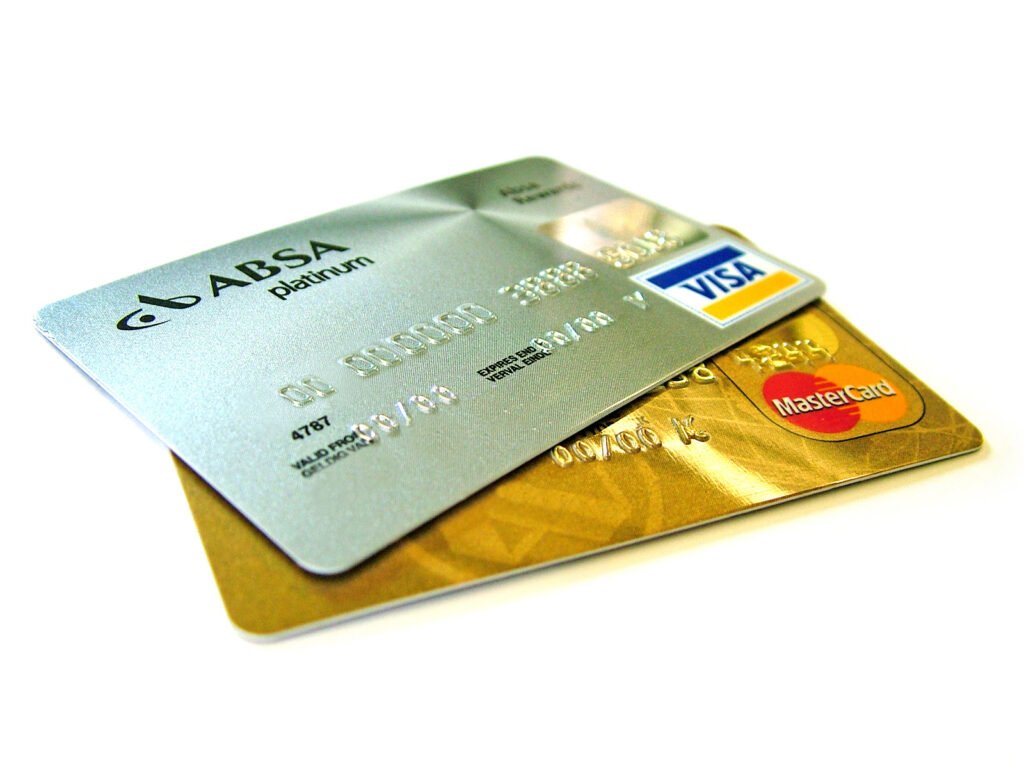
In short: Credit card interest is the primary revenue stream for issuers, generated by charging cardholders for the privilege of borrowing money. Banks calculate these rates based on an individual’s credit risk to ensure profitability while minimizing losses from unpaid balances.
Convenience is the most expensive luxury in the modern financial landscape. We have been conditioned to view the plastic in our wallets as a direct extension of our purchasing power, yet it is actually a sophisticated mechanism for high-margin borrowing. Every time a consumer swipes a card, a complex sequence of financial obligations is triggered, one that favors the institution over the individual. This is not merely about the ability to buy goods; it is about the architecture of interest, a system designed to turn a momentary transaction into a long-term revenue stream for global banking institutions.
The Rise: The Architecture of the Modern Issuer
To understand how we reached this state of perpetual obligation, one must first understand the fundamental role of a credit card issuer. At its core, a credit card issuer is a bank or credit union that provides a consumer with a card or an account number. This number serves a dual purpose: it allows the consumer to make payments to various payees while simultaneously borrowing money from the bank. When you purchase an item, the bank pays the merchant on your behalf. In that instant, you have transitioned from a consumer to a debtor. The bank has essentially provided a short-term loan to cover the cost of your lifestyle.
The scalability of this model changed the trajectory of banking. Historically, lending required a direct, physical relationship between the lender and the borrower. However, the advent of the credit card transformed lending into a frictionless, high-volume enterprise. The bank no longer needs to vet every single transaction; they vet the person. By establishing a line of credit, the bank creates a continuous opportunity to lend. This shift moved the banking sector from a model of transactional lending to one of relational, continuous debt. The infrastructure was built to ensure that the act of spending is inextricably linked to the act of borrowing, creating a cycle that is difficult to break once it has begun.
The Peak: The Mathematics of Risk and Profitability
As the credit card industry expanded, the complexity of its revenue models grew in tandem. Banks realized that the real profit did not lie in the occasional transaction, but in the interest charged over the time the money remains borrowed. This is the crux of the industry: the optimization of interest based on credit risk. A bank’s profitability is a delicate balancing act. On one hand, they want to lend as much as possible to maximize interest revenue. On the other hand, banks suffer significant losses when cardholders do not pay back the borrowed money as agreed. Therefore, the calculation of interest is not a random act, but a highly calculated scientific process.
To achieve this optimal calculation, banks rely on a massive data infrastructure. Before a single cent is lent, banks typically check national and international credit bureau reports. These reports identify the borrowing history of the applicant with other banks, providing a roadmap of their reliability. This is supplemented by detailed interviews and rigorous documentation of the applicant’s finances. The goal is to assign a specific risk profile to every individual. High-risk individuals are charged higher interest rates to compensate the bank for the statistical likelihood of default. Low-risk individuals may receive better terms, but even they are part of a system designed to maximize the “float”—the period during which they owe money. The industry has reached a peak where data science and financial engineering allow banks to extract maximum value from every segment of the population.
The Turning Point: The Frictionless Trap
The turning point in the consumer-bank relationship occurred when the friction of borrowing was almost entirely removed. In the past, taking out a loan required a conscious decision, a meeting with a banker, and a clear understanding of the repayment terms. The credit card removed this psychological barrier. By integrating the ability to pay and the ability to borrow into a single, seamless action, the industry successfully turned convenience into a tool for permanent debt. The “convenience” of the card masks the reality that the user is constantly operating on borrowed capital.
This seamlessness created a fundamental shift in consumer behavior. When borrowing is easy, the perception of cost changes. The immediate gratification of a purchase often outweighs the long-term mathematical reality of compounding interest. This is where the industry’s true genius lies: they have created a product where the user’s convenience is the engine of the bank’s revenue. The more seamless the transaction, the less the consumer feels the weight of the debt until the monthly statement arrives. This transition from “borrowing to buy” to “spending with borrowed money” represents the moment the industry moved from a service-based model to a rent-seeking model based on the time-value of consumer debt.
The Fall: The Erosion of Capital and the Risk of Default
While the industry appears invincible, it is constantly fighting against its own inherent volatility: the risk of default. Because the entire profitability of the credit card model relies on interest, a sudden shift in the ability of cardholders to repay their debts can threaten the stability of the issuer. If cardholders do not pay back the borrowed money as agreed, the bank loses not just the interest, but the principal itself. This is why the industry is so heavily regulated and why the vetting process is so incredibly intense. The bank’s survival depends on its ability to predict human behavior and economic shifts with extreme precision.
The “fall” in this context is not necessarily the collapse of the banks, but the erosion of consumer wealth. As more of a household’s income is diverted toward interest payments, their ability to build actual capital diminishes. This creates a systemic risk where a large portion of the population becomes “debt-trapped”—living in a state of permanent repayment. For the bank, this is a double-edged sword. While interest revenue is high, the risk of mass default during economic downturns is a constant shadow. The industry must constantly recalibrate its interest rates and credit requirements to navigate the thin line between maximizing profit and facing a catastrophic wave of non-repayment.
The Lesson: Reclaiming Agency in a Debt-Driven Economy
The lesson for the modern individual is clear: you must understand that the convenience of credit is a calculated trade-off for your future income. To navigate this landscape successfully, one must view credit not as “extra money,” but as a high-interest loan that must be managed with extreme discipline. The bank’s goal is to keep you in a state of perpetual borrowing, as that is where their profitability resides. They use your history, your documentation, and your risk profile to determine how much of your future wealth they can capture today.
To reclaim agency, you must treat credit as a tool of utility rather than an extension of income. This means understanding the mathematical reality that interest is a fee for the loss of your future autonomy. Always prioritize the repayment of the principal over the convenience of the minimum payment. By understanding the mechanics of how banks generate revenue through your debt, you move from being a passive subject of their interest calculations to an informed actor in your own financial life. The goal is to use the system without becoming a permanent component of its revenue model.
Frequently Asked Questions
How do banks make money from credit cards?
Banks generate revenue by paying merchants on behalf of the consumer and then charging the cardholder interest on the borrowed amount.
What determines a person’s credit card interest rate?
Banks analyze national and international credit bureau reports to assess an applicant’s borrowing history and financial documentation to determine risk.
Why do banks care about credit risk?
Banks suffer losses when cardholders fail to repay borrowed money, making accurate interest calculation vital for maintaining profitability.
What is a credit card issuer?
A credit card issuer is a bank or credit union that provides a card or account number to facilitate simultaneous payments and borrowing.