
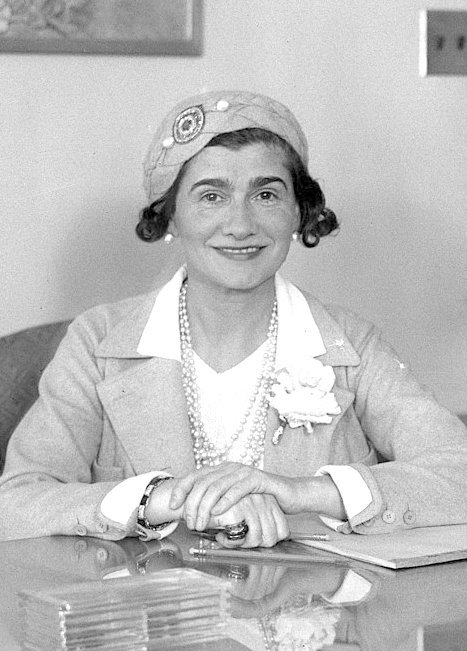
In short: Coco Chanel transformed from a poor orphan into the only fashion designer honored on Time’s 100 most influential people of the 20th century by pioneering casual, sporty elegance as the feminine standard and building a luxury empire spanning couture, fragrance, and accessories. Her business model—extending influence beyond clothing into lifestyle products like Chanel No. 5—created a template for modern luxury brands that persists today.
The Contradiction at the Heart of Luxury
The woman who became synonymous with elegance, refinement, and the aspirational luxury that defines modern fashion was born into nothing. Gabrielle Bonheur Chanel entered the world on August 19, 1883, not into the salons of Paris but into the grinding poverty of rural France, the daughter of a street peddler. By the time she turned twelve, her mother was dead. Her father abandoned the family shortly after. There was no inheritance waiting. No family name to trade on. No safety net. What Coco Chanel possessed instead was something far more valuable to a builder of empires: she had nothing to lose and everything to prove.
This paradox—that the architect of the most aspirational luxury brand in history began as a discarded orphan—is not incidental to her story. It is the story. Every decision she made, every rule she broke, every innovation she forced upon an industry that resisted her, flowed directly from the fact that she refused to accept the limitations her birth imposed. She did not inherit wealth. She created it. She did not inherit taste. She invented it. And in doing so, she became the only fashion designer in human history to be named one of Time magazine’s 100 most influential people of the 20th century—a distinction that places her alongside Einstein, Churchill, and Gandhi in the pantheon of those who genuinely altered the course of civilization.
To understand how an orphan built the most powerful fashion empire in history is to understand something essential about how empires are actually built: not through accident, not through inheritance, not through luck, but through the relentless application of clarity, discipline, and the willingness to see what others cannot see.
The Rise: From Orphanage to Couture House
After her parents’ deaths, Chanel was placed in the care of relatives—specifically, her great-aunt at a convent school in Vichy. The convent was not a place of warmth or encouragement. It was an institution designed to produce obedient, modest women suited for marriages of convenience or religious life. Chanel hated it. But she learned something crucial there: discipline. The ability to follow rules precisely, to understand structure, to master the details of presentation and appearance. These were skills the nuns taught her without knowing they were preparing her to revolutionize an entire industry.
By her late teens, Chanel had escaped the convent and moved to Vichy proper, where she worked as a seamstress and performed in local cabaret shows. She was not a great singer. She was not classically beautiful by the standards of the era. What she possessed was presence—an ability to command attention, to make people look at her, to project confidence that seemed to defy her actual circumstances. She was poor, but she acted as though poverty were simply a temporary administrative error soon to be corrected.
In her early twenties, Chanel met Etienne Balsan, a wealthy textile heir and cavalry officer. Balsan became her patron and introduced her to the world of French high society—not as a member, but as an accessory to a wealthy man. This was the position available to a woman of her class and background: mistress, companion, decoration. But Chanel did not accept the role as defined. Instead, she used her access to observe. She watched how wealthy women dressed, how they moved, what they valued. And she began to see something that the fashion establishment of the time could not see: that the women of the post-World War I era did not actually want to be ornaments. They wanted to move. They wanted to work. They wanted to live.
The fashion industry in the early 1900s was built on constraint. Women wore corsets that restricted breathing. They wore layers of heavy fabric that made movement difficult. They wore hats so elaborate they required architectural engineering to remain balanced on the head. The entire system was designed to display wealth through immobility—the more ornate and restrictive your clothing, the more it proved you did not need to work, did not need to move, did not need to do anything but exist as a beautiful object.
Chanel saw that this system was dying. The First World War had forced women into factories, into nursing roles, into positions that required actual movement and functionality. When the war ended, those women did not want to return to corsets. They wanted clothing that allowed them to live the lives they had discovered they could live. Chanel understood this shift before the fashion industry did. She began designing hats—simple, elegant, functional hats that could actually be worn while doing things. Then she moved into clothing: loose-fitting, comfortable designs that suggested elegance through simplicity rather than through elaborate ornamentation.
By the 1920s, Chanel had established herself as a couture designer of genuine significance. But she did not stop at clothing. She understood something fundamental about how to build an empire: you do not build an empire in a single category. You build it by extending your influence across multiple categories, each one reinforcing the others, each one creating new revenue streams and new reasons for customers to engage with your brand.
The Peak: Building an Empire Beyond the Runway
The 1920s and 1930s were the era of Chanel’s absolute dominance. She had not merely created a fashion house; she had created a lifestyle brand before that term even existed. Her influence extended into jewelry, handbags, and accessories—each product designed to carry the Chanel aesthetic into the everyday lives of women who could not afford a couture gown but could afford a handbag or a piece of jewelry. This was not accidental. This was strategic empire-building.
The most significant product in Chanel’s portfolio was Chanel No. 5, her signature fragrance. Launched in 1921, Chanel No. 5 became more than a perfume; it became an icon. It became a product so associated with luxury, femininity, and aspiration that it transcended the category of fragrance and entered the category of cultural artifact. Women did not buy Chanel No. 5 because it smelled good, though it did. They bought it because owning Chanel No. 5 meant something. It meant you had taste. It meant you understood elegance. It meant you were connected to the world of luxury and sophistication that Coco Chanel had created.
The fragrance business was crucial to Chanel’s empire-building strategy for a specific reason: fragrance has higher margins than couture. A couture gown requires hundreds of hours of handwork. A bottle of fragrance requires one pour. This means that fragrance could generate enormous profits with far less labor investment. But fragrance alone would not have succeeded. What made Chanel No. 5 successful was the brand ecosystem Chanel had already constructed. By the time the fragrance launched, “Chanel” already meant something. It already signified a particular vision of feminine elegance. The fragrance was simply the latest expression of that vision.
Chanel also understood something crucial about personal branding: your own image is your most powerful marketing tool. Chanel was not merely a designer; she was a personality. She was visible. She was quotable. She had opinions about fashion, about women, about society. She made herself the face of her brand in an era when most designers remained anonymous. This created a feedback loop: the more famous Coco Chanel became as a personality, the more valuable her name became as a brand. And the more valuable her name became as a brand, the more products she could attach it to.
By the 1930s, Chanel had built something unprecedented: a global luxury empire that spanned multiple product categories, all unified by a single vision and a single name. She had stores in Paris, London, and the United States. She had licensing agreements that allowed her brand to appear on products she did not directly manufacture. She had created a business model that would later become the standard template for all modern luxury conglomerates—extend the brand across categories, maintain absolute control over brand identity, use the founder’s personality as a marketing tool, and ensure that every product carries the same message about what the brand represents.
Most importantly, she had done all of this as a woman in an industry and an era that actively resisted female entrepreneurship. She had not inherited her position. She had not married into it. She had built it through clarity of vision, ruthless execution, and the ability to see what the market needed before the market knew it needed it.
The Turning Point: Ambition, War, and Moral Compromise
In 1939, with the outbreak of World War II, Chanel’s couture house closed. France fell to Nazi Germany in 1940. Paris was occupied. The world Chanel had built—the world of luxury, of fashion, of the refined aesthetic she had spent decades constructing—seemed to have ended. For most people, this would have meant retreat, survival, hoping to endure until the war ended and normal life resumed.
Chanel did not retreat. Instead, she made a choice that would complicate her legacy forever: she collaborated with the Nazi occupation and the Vichy puppet regime. Declassified documents later revealed that she had collaborated directly with Nazi intelligence, the Sicherheitsdienst. In late 1943, a plan was even discussed for her to carry an SS peace overture to Winston Churchill in an attempt to end the war.
The reasons for this collaboration were complex and remain debated by historians. Some argue that Chanel was motivated by her relationship with Baron Hans Günther von Dincklage, a German diplomat and spy she had known before the war and with whom she began a liaison during the occupation. Others suggest that Chanel, like many French business owners, was attempting to protect her assets and her business interests during the occupation. Still others argue that she was motivated by anti-communist sentiment and saw collaboration as a way to prevent a Soviet takeover of France.
What is certain is that Chanel made a choice. She chose to engage with the Nazi regime. She chose to use her influence and her connections in service of that regime. She chose to prioritize her business interests and her personal relationships over the principles that would later define her as a humanitarian and a visionary. This choice cannot be erased from her story. It cannot be minimized. It cannot be explained away as simply a product of the times or the circumstances.
The choice was consequential. When the war ended, Chanel was interrogated about her collaboration. She faced the possibility of being charged as a collaborator, which could have meant imprisonment or worse. She was not charged, reportedly due to intervention by her friend Winston Churchill—the same Churchill she had allegedly been asked to carry peace overtures to. This intervention is itself remarkable and suggests that Chanel’s connections and influence extended far beyond the fashion world into the highest levels of international politics.
The turning point was not merely the war. It was the moment when Chanel had to choose between her principles and her interests, and she chose her interests. It was the moment when the woman who had built an empire on the principle of creating a new vision of feminine independence and freedom collaborated with a regime dedicated to destroying freedom. This contradiction—between the Chanel brand’s values and Chanel’s own wartime choices—would haunt the brand’s reputation for decades and remains a subject of historical and ethical debate to this day.
The Fall and Resurrection: The Cost of Collaboration and the Power of Legacy
After the war ended, Chanel faced a precarious situation. Her couture house had been closed for six years. The fashion world had moved on. New designers had emerged. The aesthetic she had pioneered in the 1920s and 1930s was no longer novel. She was no longer young—she was in her sixties, an age when most people consider their productive years behind them. And she carried the stain of collaboration, a stain that could have destroyed her entirely.
Chanel moved to Switzerland after the war, effectively exiling herself from Paris and from the fashion world. She could have remained there. She could have retired, lived off her wealth, and allowed her legacy to be defined by her accomplishments before the war. But she did not. Instead, she waited. She observed. She planned. And in 1954, at the age of seventy-one, she returned to Paris to revive her fashion house.
The return was not triumphant. The fashion world was skeptical. Critics dismissed her designs as outdated, relics of a previous era. But Chanel had learned something crucial during her exile: the power of heritage, the power of history, the power of a brand that had already been established as iconic. She did not try to reinvent herself or to chase contemporary trends. Instead, she doubled down on what had made her relevant in the first place: the Chanel suit, the Chanel aesthetic, the vision of elegant simplicity that had defined her work for decades.
The strategy worked. By the late 1950s, Chanel was relevant again. The Chanel suit became a status symbol worn by celebrities and aristocrats. The interlocked-CC monogram, which Chanel had designed in the 1920s and which had been in use throughout her career, became one of the most recognizable symbols in the world. Chanel No. 5 remained the best-selling fragrance on the planet. The empire that had seemed to be in terminal decline in 1945 had been resurrected.
Chanel lived until January 10, 1971, dying at the age of eighty-seven. By the time of her death, she had reclaimed her position as one of the most influential figures in fashion history. But the question of her wartime collaboration remained. It was not forgotten. It was not entirely forgiven. It complicated the narrative of her life and her legacy.
What is remarkable is that despite this complication—despite the moral stain of collaboration—the Chanel brand did not collapse. The empire survived. It thrived. This suggests something important about how empires are built and sustained: they are sustained not by the moral purity of their founders, but by the clarity and consistency of the vision they represent. The Chanel brand represents a vision of elegant simplicity, of feminine independence, of the idea that true luxury is about refinement rather than ornamentation. That vision proved to be more durable than the personal failings of the woman who created it.
The Lesson: Building an Empire on Vision, Not Circumstance
The story of Coco Chanel contains a lesson that extends far beyond fashion. It is a lesson about how empires are built, how they are sustained, and how they can survive even when their founders make catastrophic moral choices.
The first part of the lesson is this: empires are not built by accepting the circumstances of your birth. Chanel was born poor. She was born an orphan. She was born female in an era when female entrepreneurs were actively discouraged. She could have accepted these circumstances as limitations. Instead, she treated them as irrelevant. She decided that her birth circumstances did not define her future. She decided that she would create her own circumstances. This is not a romantic notion. This is a practical one. The most successful entrepreneurs are those who refuse to accept that their starting position is their ending position.
The second part of the lesson is this: empires are built by seeing what others cannot see. Chanel saw that post-World War I women did not want to be ornaments. She saw that the fashion industry was built on a model that was becoming obsolete. She saw that luxury could be extended beyond a single product category into a lifestyle brand. She saw that a founder’s personal brand could be a marketing tool. She saw these things before anyone
Frequently Asked Questions
Was Coco Chanel truly an orphan?
Yes. Gabrielle Bonheur Chanel was born August 19, 1883, and lost her mother at age 12 and her father shortly after, leaving her in the care of relatives. This early loss shaped her independence and drive to build her own fortune rather than depend on family wealth.
What made Chanel No. 5 so successful?
Chanel No. 5 became iconic because Chanel extended her influence beyond couture clothing into fragrance—a category most designers had not dominated. The signature scent, combined with her interlocked-CC monogram designed in the 1920s, created a recognizable luxury product that transcended fashion into lifestyle.
Did Chanel collaborate with the Nazis?
Yes. Declassified documents confirmed Chanel collaborated with Nazi intelligence (the Sicherheitsdienst) during the German occupation of France. She was interrogated after World War II but was not charged as a collaborator, reportedly due to intervention by British Prime Minister Winston Churchill.
When did Chanel restart her fashion house after World War II?
Chanel moved to Switzerland after the war ended, then returned to Paris in 1954 to revive her fashion house. Her couture operations had closed in 1939 with the outbreak of World War II.