
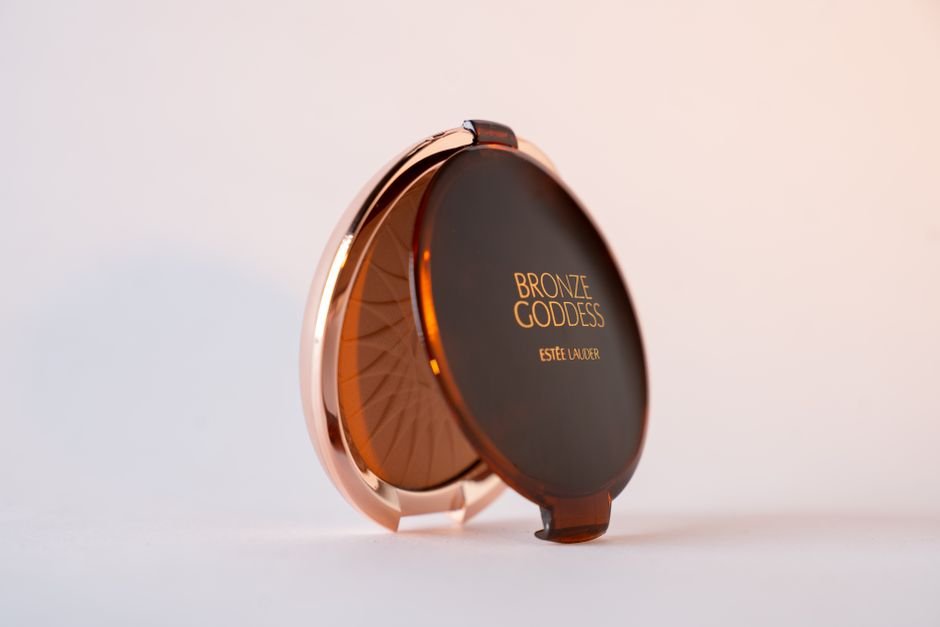
In short: Estée Lauder built the world’s second-largest cosmetics empire by starting in her kitchen with homemade skincare creams, refusing to discount her products, and pioneering the concept of the beauty advisor. Her obsession with quality, relentless sales technique, and willingness to give away samples transformed a local operation into a multinational powerhouse that still dominates luxury beauty today.
The Paradox: A Woman Without Credentials Built a Beauty Empire
Estée Lauder had no formal training in chemistry, no business degree, no family fortune, and no connections in the cosmetics industry—yet she built what would become the second-largest beauty company in the world. In an era when women were discouraged from entrepreneurship and the cosmetics industry was dominated by men and inherited wealth, Lauder created an empire that would outlast most of her competitors and reshape how beauty was sold globally. Her story is not one of luck or timing. It is a story of relentless obsession with a single idea: that women deserved products worthy of their skin, and that they deserved to be sold those products with honesty and care.
The paradox at the heart of Estée Lauder’s success is this: she built a luxury brand by refusing to act like a typical luxury brand. While her competitors guarded their formulas and kept their distance from customers, Lauder gave away samples freely, touched customers’ faces herself, and treated each sale as the beginning of a relationship, not the end of a transaction. While other beauty companies advertised through mass media, Lauder sold through direct, personal connection. While the industry pushed volume and discounts, she pushed scarcity and full price. Every rule she broke became the foundation of her empire.
The Kitchen Years: Where Obsession Becomes Product
The story of Estée Lauder’s business begins not in a factory or boardroom, but in a kitchen in Queens, New York, sometime in the 1930s. Lauder was the daughter of a Hungarian immigrant father and a mother of French and English descent. Her early years were spent watching her father’s skincare business—he was a chemist who made face creams—and absorbing his philosophy that quality ingredients and careful formulation were non-negotiable. But her father’s business was modest and local. Estée had bigger ambitions.
In her kitchen, Lauder began experimenting with her own formulations. She created a basic skin cream called “Super-Rich All Purpose Creme,” which became the foundation of her entire enterprise. The formula was simple by modern standards, but Lauder’s approach to it was revolutionary: she refused to compromise on ingredients, she tested the product obsessively on her own skin, and she believed—with an almost religious conviction—that this cream could change women’s lives. This was not marketing hyperbole. This was genuine belief. That belief would become contagious.
Lauder’s first customers were not department store buyers or beauty editors. They were her friends, her family, and the women she met at local salons. She would approach women on the street, in restaurants, anywhere she could find an audience. She would compliment their skin, ask about their routine, and then—this was the crucial moment—she would offer to give them a sample of her cream and show them how to use it. The sample was never meant to be a tease. It was meant to be so effective, so clearly superior to what they were currently using, that women would have no choice but to buy the full product. This strategy of the free sample became her most powerful weapon.
What separated Lauder from other small-scale beauty entrepreneurs was her refusal to accept “no” and her willingness to reinvent her approach based on feedback. She would stand in beauty salons and demonstrate her products for hours. She would offer to train salon owners’ staff for free. She would give away so many samples that salon owners eventually agreed to stock her full line just to stop the endless supply of free creams. She was not aggressive in a harsh way. She was aggressive in the way that a river is aggressive—constant, patient, and ultimately unstoppable.
The Breakthrough: When Department Stores Discovered Her
By the early 1940s, Lauder had built a modest but growing business selling through beauty salons and direct sales. But she knew that real growth required access to department stores. Department stores were where American women shopped for luxury goods. They were where a brand became legitimate. They were where a woman could buy a dream.
Getting into department stores was extraordinarily difficult. Buyers were skeptical of unknown brands, especially those made by unknown women. They wanted established suppliers with proven track records. Lauder had neither. What she had was persistence and a product she believed in completely. She began approaching department store buyers directly, offering to demonstrate her products on the sales floor. Most buyers ignored her. Some were rude. Lauder kept going.
The breakthrough came when a buyer at Saks Fifth Avenue in New York finally agreed to give her a chance. Lauder was allowed to set up a counter and demonstrate her products. What happened next became the template for her entire distribution strategy: she gave away samples. Lots of them. She trained the salespeople at the counter. She touched customers’ faces and showed them exactly how to apply her creams. She made each customer feel like they were receiving a private consultation from an expert, not a sales pitch from a clerk.
The results were undeniable. Sales at the Saks counter exceeded expectations. Other department stores took notice. Within a few years, Lauder had secured placement in major retailers across the country. But here is the crucial point: she did not simply hand over her products to department store buyers and walk away. She maintained control over how her products were displayed, how her salespeople were trained, and how her brand was presented. She understood that the product was only half the equation. The other half was the experience of buying it.
This obsession with control extended to every detail. Lauder famously insisted on training her own sales staff, often called “beauty advisors.” These were not typical retail clerks. They were brand ambassadors who understood her philosophy and could communicate it to customers. They knew the ingredients in every product. They understood skin types and could make personalized recommendations. They treated each customer as an individual, not as a transaction. This level of service was unprecedented in the beauty industry at the time, and it became Lauder’s competitive advantage.
The Peak: Building a Luxury Brand Without Compromise
By the 1950s and 1960s, Estée Lauder had become a major force in American beauty. Her company was growing rapidly, and she faced a choice that many entrepreneurs face: compromise to grow faster, or maintain standards and grow more slowly. Lauder chose the latter. This decision defined her legacy.
One of her most famous decisions was to refuse to discount her products. In an industry where retailers often demanded discounts and promotional allowances, Lauder held firm. Her products were priced at a premium, and they stayed at a premium. She believed—correctly—that discounting would cheapen her brand and undermine the perception of luxury. If a retailer wanted to carry Estée Lauder products, they would carry them at full price, or they would not carry them at all. This policy was controversial at the time. Many retailers thought she was insane. But Lauder understood something fundamental about luxury: it is defined not by the product itself, but by the perception of exclusivity and quality. Discounting destroys that perception.
During this period, Lauder also began expanding her product line strategically. She introduced new formulations and new products, but each one was developed with the same obsessive attention to quality that had defined her original cream. She did not chase trends. She created trends. When she believed that women needed a certain product, she would develop it, test it relentlessly, and then introduce it with confidence. Her success rate was remarkably high because she was not guessing. She was listening to her customers and responding to genuine needs.
The company also began international expansion during this period. Lauder understood that luxury beauty was a global market. She opened counters in Europe, Asia, and other regions. She adapted her strategy to local markets while maintaining her core philosophy: premium positioning, personalized service, and uncompromising quality. By the 1970s, Estée Lauder was a global brand.
Another key decision during this period was vertical integration. Lauder did not simply rely on other companies to manufacture her products. She invested in her own manufacturing capabilities to maintain quality control. She understood that the product was her reputation, and her reputation was too valuable to outsource. This commitment to manufacturing excellence became a hallmark of the company and contributed significantly to her brand’s prestige.
The Turning Point: Succession and Institutional Growth
Estée Lauder did not build her empire to keep it small. She built it to last. This required thinking beyond herself and creating an organization that could survive and thrive without her daily involvement. This is where many founder-led companies fail. The founder becomes so central to the brand that the company cannot function without them. Lauder avoided this trap by bringing her son Leonard into the business and training him to understand her philosophy.
Leonard Lauder did not simply inherit a business. He inherited a set of principles and a culture of excellence. Under his leadership, the company continued to grow and expand. More importantly, he maintained his mother’s commitment to quality and brand integrity even as the company became larger and more complex. This is a crucial point: growth did not dilute the brand. Instead, growth amplified it.
During the 1980s and 1990s, the Estée Lauder Companies began acquiring other beauty brands. La Mer, Clinique, and other prestigious brands came under the Lauder umbrella. This was not a strategy of consolidation through cost-cutting. Instead, each acquired brand was allowed to maintain its own identity and philosophy while benefiting from Lauder’s operational expertise and distribution network. This approach to acquisition—respecting the integrity of acquired brands while providing resources for growth—became a model for how to build a portfolio company.
The company also adapted to changing retail environments. As department stores faced competition from specialty retailers and eventually from e-commerce, Lauder adapted her distribution strategy. But she never compromised on the core principle: her products would be sold in places where they could be presented with the proper context and expertise. She would not allow her products to be sold in discount outlets or through channels that would undermine their premium positioning. This discipline in channel management became increasingly important as the retail landscape fragmented.
The Lesson: How to Build Something That Lasts
Estée Lauder died in 2004 at the age of 97, having built a business that continues to thrive decades after her death. The Estée Lauder Companies Inc. remains the second-largest cosmetics company in the world, with headquarters in Midtown Manhattan and a portfolio that includes dozens of brands distributed globally through both retail and digital channels. Her empire has weathered recessions, technological disruption, and massive changes in consumer behavior. It has remained relevant and profitable through it all.
What can we learn from her story? Several principles emerge from Lauder’s life and work that apply far beyond the beauty industry.
First, obsession with quality is not a luxury. It is a foundation. Lauder never compromised on the quality of her products, even when it would have been cheaper and easier to do so. She understood that quality is not just about the product itself. It is about the message you send to your customers: “I respect you enough to give you the best.” This message builds loyalty that discounting can never achieve.
Second, the experience of buying is as important as the product itself. Lauder did not simply make creams. She created an experience around buying and using those creams. She trained her salespeople to provide personalized service. She designed her packaging and displays to communicate luxury and care. She understood that in the beauty industry—and in many other industries—customers are not just buying a product. They are buying an idea of themselves. The experience of purchase is part of that idea.
Third, premium positioning requires discipline. Lauder’s refusal to discount her products was not arrogance. It was a clear-eyed understanding of how luxury brands work. Discounting destroys the perception of exclusivity and quality. If you want to be premium, you must be willing to say no to short-term sales opportunities in service of long-term brand equity. This is difficult. Most entrepreneurs lack the discipline to do it. Lauder had that discipline.
Fourth, direct customer connection is irreplaceable. In an era before mass marketing, Lauder built her business through direct, personal contact with customers. She would stand at department store counters and talk to women about their skin. She would give away samples and show women how to use her products. This created a relationship between the brand and the customer that advertising alone could never achieve. In today’s world of digital marketing and social media, this principle remains true. The brands that build the strongest loyalty are those that create genuine connection with their customers.
Fifth, the founder’s values must be embedded in the organization’s culture. Lauder’s commitment to quality, to customer service, and to premium positioning did not die with her. These values were so deeply embedded in the company’s culture that they persisted through leadership transitions and organizational growth. If you want to build something that lasts beyond your own involvement, you must make your values explicit and hire people who share them.
Finally, there is a lesson about ambition itself. Estée Lauder was ambitious. She wanted to build something big. She wanted her products to be used by millions of women. She wanted to create a global brand. But her ambition was not about ego or wealth accumulation. It was about impact. She believed that women deserved better skincare products, and she was willing to work relentlessly to make that belief a reality. This kind of ambition—ambition in service of something larger than yourself—is the kind that builds empires that last.
The woman who started with a kitchen and a cream became one of the most influential figures in business history. She did not have the advantages that most successful entrepreneurs have. She had something more valuable: an idea she believed in completely, the willingness to work harder than anyone else, and the discipline to never compromise on her core principles. These are not unique talents. They are choices. And they are available to anyone willing to make them.
Frequently Asked Questions
How did Estée Lauder start her business?
Lauder began in the 1930s by creating skincare products in her kitchen, initially giving them away to friends and salon clients. She then began selling them door-to-door and in beauty salons, using her own face as a living advertisement. Her willingness to offer free samples and personalized beauty consultations became her signature sales method.
What made Estée Lauder different from other beauty brands?
Lauder refused to discount her products, positioning them as luxury items worth full price. She also pioneered the “beauty advisor” concept, training salespeople to provide personalized consultations rather than just transactions. Her relentless focus on product quality and brand prestige set her apart in a crowded market.
When did Estée Lauder Companies go public?
The Estée Lauder Companies Inc. was founded as a formal enterprise and grew through strategic acquisitions and brand development throughout the mid-to-late 20th century. Today it is the second-largest cosmetics company in the world after L’Oréal, with headquarters in Midtown Manhattan.
What brands does Estée Lauder own today?
The portfolio includes La Mer, Jo Malone London, Clinique, Tom Ford Beauty, MAC, Bobbi Brown, and many others. The company distributes these brands globally through retail, department stores, and digital commerce channels, serving millions of customers across multiple price points and market segments.