
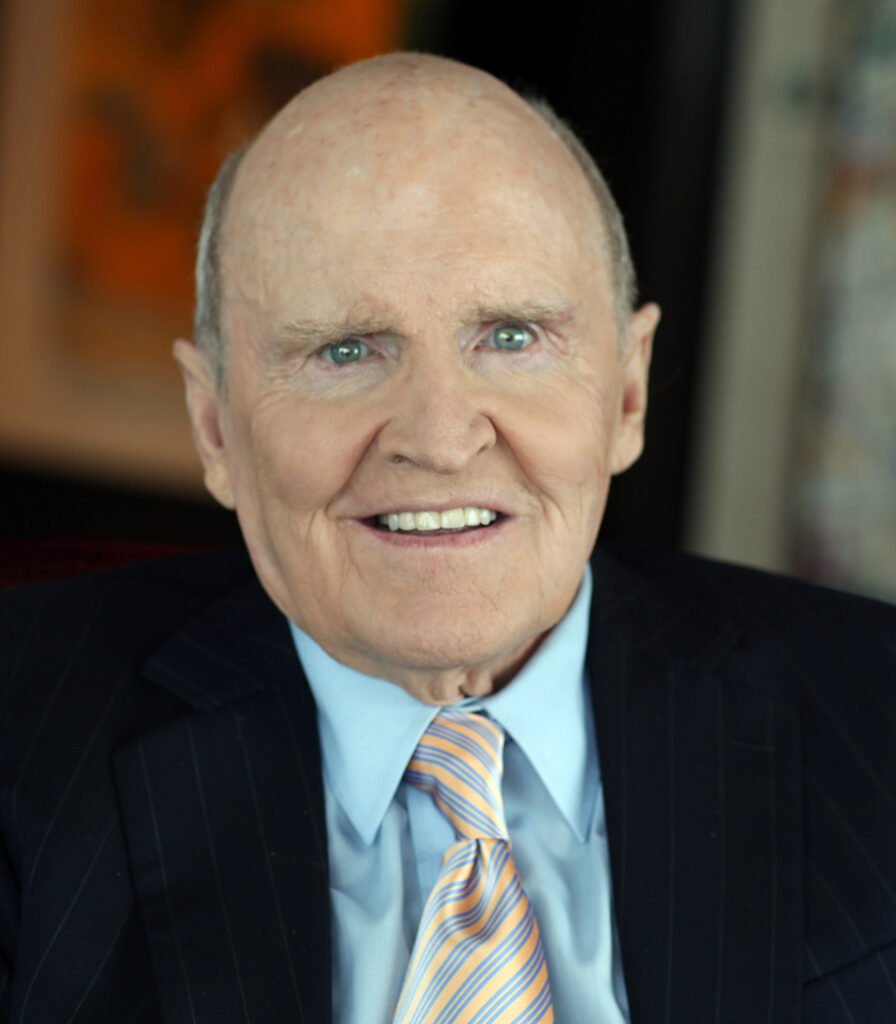
In short: Jack Welch transformed GE from a $14 billion company into a $600 billion powerhouse between 1981 and 2001 through aggressive acquisition, ruthless restructuring, and a pivot into financial services. His methods created short-term shareholder value but left GE dependent on GE Capital, which collapsed in 2008 and forced the eventual breakup of the company he built.
The Paradox: How the World’s Greatest CEO Built a Company That Couldn’t Survive Without Him
Jack Welch is remembered as one of the greatest chief executives of the twentieth century—a man who took a tired industrial conglomerate and transformed it into the most valuable company on Earth. Yet by the time his successor took over, the foundation he had built was already rotting from within. The company that made Welch famous would eventually be broken into three separate pieces, discarded like a failed experiment. This is not a story of triumph followed by gradual decline. It is a story of a strategy so effective in the short term that it became catastrophic in the long term.
John Francis Welch Jr. was born on November 19, 1935, and died on March 1, 2020. In between, he changed American business forever—though not always for the better. He was chairman and CEO of General Electric for exactly twenty years, from 1981 to 2001. During that time, he executed one of the most aggressive corporate transformations in history. But transformation and sustainability are not the same thing. What Welch built was a masterpiece of financial engineering designed to maximize shareholder value in the moment. What he left behind was a company that had forgotten how to make things.
The Rise: Taking Over a Sleeping Giant and Shaking It Awake
When Welch became CEO of General Electric in 1981, the company was not in crisis. It was worse than that—it was complacent. GE was a sprawling, bureaucratic industrial conglomerate with a market value of $14 billion. It made light bulbs, turbines, locomotives, and appliances. It was profitable. It was stable. It was also, by Welch’s assessment, dying. The company had too many layers of management, too many underperforming divisions, and too much fat. Welch saw inefficiency everywhere he looked.
His diagnosis was correct. GE was structured like a company designed to fail in a competitive world. The organization was bloated with middle management. Decision-making moved at the speed of bureaucracy. Divisions that should have been cut loose were kept alive by corporate inertia. Welch did not believe in gradual reform. He believed in shock therapy.
The first phase of Welch’s tenure was characterized by what he called “delayering”—the systematic removal of management layers and the elimination of underperforming business units. This was not a gentle process. Welch earned the nickname “Neutron Jack” because, as critics said, he eliminated people but left the buildings standing. Thousands of employees were laid off. Entire divisions were sold off or shut down. The corporate headquarters was reduced in size. Bureaucratic processes were streamlined. Welch was not interested in being liked. He was interested in results.
This ruthless efficiency had an immediate effect on GE’s financial performance. The company became leaner, faster, and more profitable. Shareholders noticed. The stock price rose. Welch’s reputation as a transformational leader began to build. But this was only the first act. The real transformation came when Welch began to reshape what GE actually did.
The Peak: Building a Financial Powerhouse Disguised as an Industrial Company
In 1986, Welch made one of the most consequential acquisitions in business history: he bought the RCA Corporation. This was not a small deal. RCA was a major electronics and entertainment company. The acquisition cost billions and immediately made GE a player in new markets. But the RCA acquisition was not the most important thing Welch did in the 1980s and 1990s. The most important thing was the expansion of GE Capital.
GE Capital had existed before Welch, but it was a small division, a financial arm designed to help GE’s industrial customers finance their purchases. Under Welch, GE Capital transformed into something much larger and much more profitable. It became a full-service financial services company. It made loans. It purchased receivables. It got into insurance, leasing, and real estate. By the late 1990s, GE Capital accounted for nearly 40 percent of GE’s total revenue. GE had become, in effect, a financial services company that happened to also make industrial equipment.
This was the genius of Welch’s strategy, and also its fatal flaw. Financial services are more profitable than manufacturing. They generate higher margins and require less capital investment. A dollar of GE Capital revenue was worth more to shareholders than a dollar of industrial revenue. This made the financial statements look spectacular. GE’s earnings grew consistently. The stock price soared. Investors loved it. Analysts praised Welch’s vision. He was reshaping GE for the modern economy, they said. He was moving the company away from old industrial businesses and into the high-margin world of finance.
Welch also implemented his famous “number one or two” strategy. Every GE business unit had to be either the first or second largest player in its market. If a division could not achieve this position, it was sold or shut down. This created a portfolio of market-leading businesses, each one dominant in its segment. On paper, this looked perfect. GE was now composed entirely of winners. In reality, Welch had created a company that was entirely dependent on continued market growth and the assumption that financial markets would always reward financial services companies.
By the end of the 1990s, GE had become the most valuable company in the world. Its market capitalization exceeded $600 billion. Welch was celebrated as a visionary. Business schools taught his methods. Other CEOs tried to copy his playbook. He received a severance package of $417 million when he retired in 2001—the largest such payment in business history at that time. His net worth was estimated at $720 million by 2006. By every measure of financial success, Welch had won.
The Turning Point: When the Foundation Proved to Be Sand
The cracks in Welch’s strategy did not appear immediately after he left. They took years to become visible. His successor, Jeffrey Immelt, inherited a company that looked invincible. GE was the most valuable company in the world. It had a portfolio of market-leading businesses. It had a powerful financial services arm. What could go wrong?
The answer came in 2008. The financial crisis that began with the collapse of Lehman Brothers revealed a fundamental problem with Welch’s strategy: GE Capital was not a fortress. It was a house of cards. When credit markets froze, GE Capital’s business model broke down. The company that had become so profitable through financial services suddenly became a liability. GE Capital needed a government bailout. The federal government had to provide liquidity support to keep the company from collapsing.
This was the moment when it became clear that Welch’s transformation had a fatal weakness. By moving so aggressively into financial services, Welch had made GE dependent on the assumption that financial markets would always function smoothly. He had bet the entire company on the idea that credit would always be available and that the financial services business would always be profitable. When that assumption proved false, the entire structure began to crumble.
The industrial businesses that GE had retained were good businesses, but they were not enough to support the company’s valuation or its culture. GE had become a financial services company that happened to make industrial equipment. When financial services stopped working, there was nothing left to fall back on. The company that Welch had built was revealed to be far more fragile than anyone had realized.
The Fall: The Dismantling of an Empire
What happened to GE after the 2008 financial crisis was not a quick collapse. It was a slow, painful deterioration. GE Capital was eventually wound down. The company’s stock price, which had been one of the most reliable performers in the market, began to decline. Investors who had trusted Welch’s strategy lost billions of dollars. The company that had been the most valuable in the world fell further and further behind.
By the 2010s, it became clear that GE could not be saved as a unified company. The portfolio that Welch had so carefully constructed—selling off businesses that were not number one or two in their markets—was now seen as a problem rather than a solution. GE had become too large, too complex, and too dependent on a strategy that no longer worked.
In 2020, GE announced that it would be broken up into three separate companies. One would focus on aviation. One would focus on healthcare. One would focus on power and renewable energy. The company that Welch had built into a unified powerhouse would be dismantled. The strategy that had made GE the most valuable company in the world had failed so completely that the only solution was to destroy the company and start over.
This was not a gentle process. Shareholders who had benefited from Welch’s tenure lost enormous amounts of money as the company’s value collapsed. Employees lost jobs. Entire divisions were sold off. The legacy that Welch had spent twenty years building was erased. The most celebrated CEO of the twentieth century left behind a company that could not survive in the twenty-first century.
The Real Cost: What Welch’s Strategy Did to American Business
The failure of GE is not just a story about one company. It is a story about what Welch’s strategy did to American business culture more broadly. Welch’s emphasis on short-term financial performance over long-term investment became the template for corporate America. Other CEOs looked at Welch’s success and tried to replicate his methods. They cut costs. They eliminated middle management. They focused on quarterly earnings. They moved into financial services. They prioritized shareholder value above all else.
This strategy worked in the short term. Companies that followed Welch’s playbook saw their stock prices rise. Executives who implemented his methods got rich. The financial markets rewarded this approach. But the long-term consequences were devastating. American manufacturing declined. Investment in research and development decreased. Companies became less innovative. The focus on short-term performance made it harder for companies to invest in the future.
Welch’s influence on corporate culture has been cited as having had a lasting effect on companies such as Amazon and many others. The obsession with quarterly earnings, the willingness to sacrifice long-term growth for short-term financial performance, the focus on financial engineering rather than product innovation—all of these things trace back to Welch’s methods. He did not invent these practices, but he perfected them and made them respectable.
The irony is that Welch’s strategy was so effective at generating short-term returns that it became the dominant model for how American corporations were run. Shareholders loved it. Executives were rewarded for it. Business schools taught it. But the strategy contained the seeds of its own destruction. By focusing so intensely on financial performance and short-term returns, Welch and the executives who followed his model created companies that were fragile, brittle, and dependent on continued market growth. When conditions changed, when markets stopped cooperating, when the assumptions underlying the strategy proved false, these companies collapsed.
The Lesson: Why Short-Term Optimization Becomes Long-Term Fragility
What can we learn from the rise and fall of Jack Welch and GE? The most obvious lesson is that short-term financial performance is not the same as long-term value creation. Welch was extraordinarily successful at generating short-term returns. He made the stock price go up. He increased earnings. He pleased shareholders. But he did this by making strategic choices that ultimately destroyed the company.
The specific lesson is this: when you optimize for a single metric—in Welch’s case, short-term earnings and stock price appreciation—you create perverse incentives throughout the organization. Everyone focuses on the metric. Everything else becomes secondary. In GE’s case, this meant that the company prioritized financial services over manufacturing, short-term profits over long-term investment, and shareholder returns over sustainable business models.
This is not to say that Welch was a bad CEO or that his methods were entirely wrong. He correctly identified that GE was bloated and inefficient. He correctly understood that the company needed to be transformed. His methods of delayering and eliminating underperforming divisions were appropriate responses to real problems. But he took these methods too far. He optimized so aggressively for short-term performance that he created a company that could not survive in changing circumstances.
The practical lesson for business leaders is this: be very careful about what you optimize for. If you optimize for short-term earnings, you will get short-term earnings. But you may destroy long-term value in the process. If you optimize for shareholder returns, you will get shareholder returns in the short term. But you may create a fragile company that cannot survive disruption. The most sustainable businesses are those that balance short-term performance with long-term investment, that balance shareholder returns with employee development, that balance financial engineering with product innovation.
Welch’s legacy is complicated. He was a brilliant executive who transformed a company and influenced an entire generation of business leaders. But the strategy he pioneered ultimately failed. The company he built could not survive without him. The methods he perfected created short-term value but long-term fragility. The culture he established prioritized quarterly earnings over sustainable growth. These are not the hallmarks of great leadership. These are the hallmarks of leadership that succeeds in the short term but fails in the long term.
The real story of Jack Welch is not a story of triumph. It is a story of a man who was extraordinarily successful at one thing—generating short-term financial returns—and whose success at that one thing ultimately destroyed the company he built. It is a cautionary tale about the dangers of optimization, the perils of short-termism, and the fragility of companies built on financial engineering rather than sustainable business models. It is a story that every business leader should understand, because the temptation to optimize for short-term performance is always present, and the consequences of giving in to that temptation are always severe.
Frequently Asked Questions
How much did GE grow under Jack Welch?
GE’s market value grew from $14 billion in 1981 to $600 billion by 2001, making it the world’s most valuable company. This 4,186% increase over 20 years established Welch as one of the most celebrated CEOs of the twentieth century.
What was Welch’s “number one or two” strategy?
Welch required each GE business unit to rank first or second in its market segment. Units that failed to meet this standard were divested or restructured, creating a leaner but more aggressive corporate portfolio.
Why did GE collapse after Welch left?
GE’s heavy dependence on GE Capital—which accounted for 40% of revenue—left the company vulnerable. When GE Capital collapsed during the 2008 financial crisis, GE’s foundation cracked, leading to its eventual breakup into three separate companies.
What was Welch’s severance package?
Welch received $417 million when he retired in 2001, the largest severance package in business history at that time. By 2006, his net worth was estimated at $720 million.