
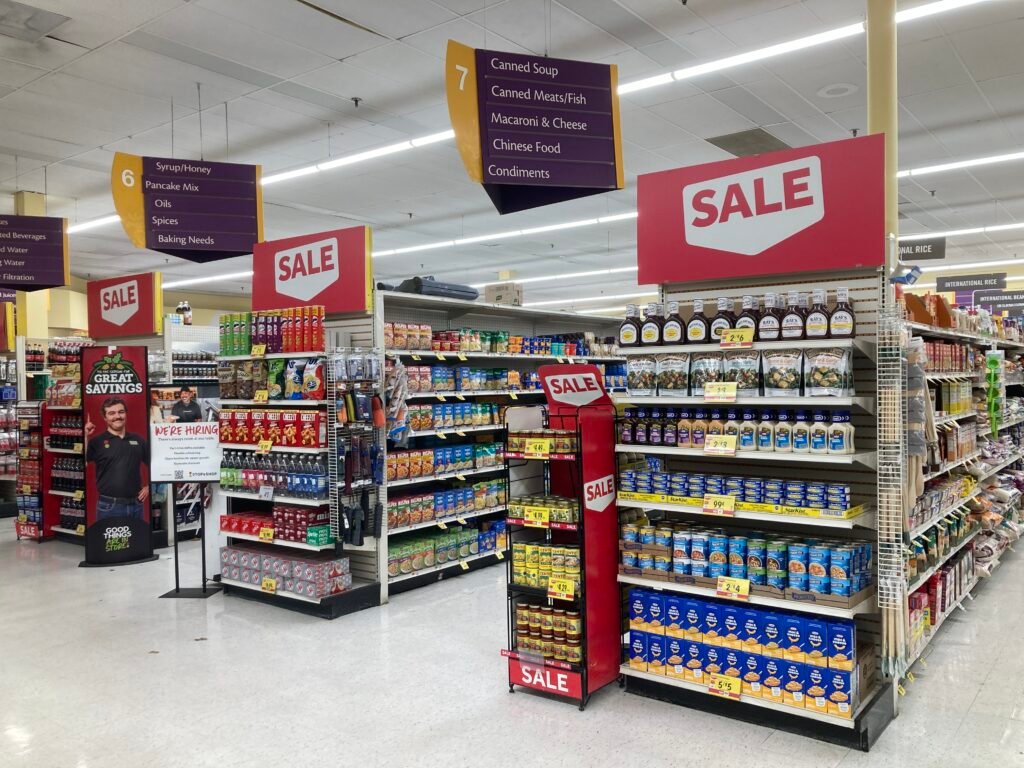
In short: Supermarkets use deliberate architectural, psychological, and merchandising techniques—from store layout to shelf placement to loss leaders—to increase customer spending well beyond their shopping lists. Every element, from entrance positioning to aisle flow to product eye-level placement, is engineered to extend shopping time and trigger impulse purchases. Understanding these mechanisms gives you the power to shop intentionally rather than be guided by design.
The Paradox at the Heart of Modern Retail
You walk into a supermarket planning to spend forty dollars on milk, bread, and eggs—and you leave with a cart full of items you never intended to buy, having spent over one hundred dollars. This isn’t an accident. It isn’t even primarily about product quality or pricing. It’s the result of nearly a century of deliberate engineering, refined through decades of trial, error, and behavioral psychology. The supermarket format, which emerged around 1930 in the United States and spread globally after 1956, was revolutionary not because it offered better products, but because it created an entirely new environment designed to manipulate purchasing behavior. The paradox is this: supermarkets present themselves as offering convenience and value—and they do—while simultaneously architecting every square foot, every shelf, every aisle to extract maximum spending from every customer. The store layout, the product placement, the pricing strategy, the lighting, even the music playing overhead—none of it is accidental. Understanding how this system works is the first step to resisting it.
The Birth of Engineered Retail: How the Supermarket Became a Spending Machine
Before the supermarket emerged around 1930, grocery shopping looked fundamentally different. Customers entered a small shop, approached a counter, and asked a clerk to retrieve items from shelves behind the counter. The customer had limited visibility into inventory, limited choice, and limited time to browse. The store controlled the transaction. Then came the innovation that changed everything: self-service. By removing the clerk as intermediary and allowing customers to select their own products from open shelves, grocers discovered something profound—customers would buy more when they could touch products, compare options, and make decisions independently. This wasn’t discovered by accident. It was the culmination of nearly two decades of retail innovation that gradually shifted control from the store to the customer. Or so it appeared. In reality, by giving customers the illusion of choice and control, retailers gained far greater power over behavior. The self-service model didn’t democratize shopping; it created a new form of persuasion.
The supermarket format spread to other countries after extensive worldwide publicity in 1956, carrying with it these psychological principles. What made the supermarket revolutionary wasn’t just the range of products—though that was substantial. It was the total environment. A supermarket, by definition, is a self-service shop offering a wide variety of food, beverages, and household products organized into sections under one roof. This organizational structure appears logical and efficient. In reality, it’s a carefully orchestrated maze designed to maximize exposure and impulse purchasing. The store occupies a large amount of floor space, usually on a single level, situated near residential areas for convenience. But convenience is only part of the appeal. The real appeal is what retailers call “dwell time”—the longer you stay in the store, the more you buy. Every architectural decision, from the entrance to the checkout, is optimized for this single metric. Even the extended shopping hours—many supermarkets operate late into the evening or 24 hours a day—serve this purpose. They’re not just accommodating customer schedules; they’re maximizing opportunities for impulse shopping when resistance is lower.
The Architecture of Persuasion: Store Layout as Behavioral Design
Walk into any supermarket and you’ll notice a pattern: the essentials—milk, bread, eggs, fresh produce—are positioned at the periphery or the very back of the store. This isn’t random. It’s deliberate. Milk, in particular, is almost always placed at the rear. Why? Because nearly every customer needs milk, and by forcing them to walk the entire length of the store to retrieve it, supermarkets maximize exposure to hundreds of other products. This extended journey through the store is where the profit margin truly lives. The customer came for milk; they’ll leave with milk, bread, eggs, cereal, frozen vegetables, a rotisserie chicken, a magazine, and a candy bar. The store’s layout has guided them past every temptation point, every high-margin product, every item positioned to catch the eye.
This principle extends to the entire store architecture. Fresh produce is typically positioned near the entrance—not because it’s convenient for customers, but because produce creates a psychological anchor of freshness and health. Customers who begin their shopping experience surrounded by vibrant vegetables and fruits feel they’re in a “healthy” store, which reduces guilt about subsequent purchases of processed foods and snacks. The psychological framing is set immediately. From there, the layout guides customers through a deliberately non-linear path. Unlike a grocery list, which typically groups similar items together (dairy with dairy, frozen with frozen), supermarket layouts deliberately separate related items. Bread is in one section, butter in another, cheese in a third. Pasta sauce is distant from pasta. This fragmentation forces customers to traverse more of the store, increasing exposure and dwell time. The effect is measurable: studies in consumer behavior consistently show that customers who spend more time in a store make more impulse purchases. The supermarket layout is optimized for this effect.
The checkout area represents the final architectural manipulation. Checkout lanes are intentionally long—longer than necessary for efficiency—and lined with impulse-buy items: candy, magazines, beverages, gum, tabloid newspapers. Customers waiting in line are captive. They’re stationary, slightly bored, and their purchasing resistance is at its lowest point. These final moments before payment are extraordinarily valuable retail real estate. The items positioned here are typically those with the highest profit margins, not the best value. A magazine that costs the store a few dollars to stock might sell for eight or nine dollars. A candy bar costs the store pennies. The checkout lane is where supermarkets capture their final opportunity to add items to the cart, and the psychology is ruthless: you’re waiting anyway, you’ve already committed to the purchase, and these items are positioned at eye level, often at child eye level (a deliberate choice to capture both adult and child purchasing impulses).
The Invisible Hand: Shelf Placement, Pricing Strategy, and Psychological Manipulation
Within each aisle, another layer of engineering takes over: shelf placement. Products at eye level are purchased significantly more frequently than those on lower or upper shelves. This isn’t speculation—it’s quantified in retail research. A product placed at eye level will outsell the same product placed on a lower shelf by a measurable margin. This reality has created an entire secondary market within supermarkets: manufacturers pay premium fees to secure eye-level shelf space. Supermarket chains have discovered that shelf placement is more valuable than advertising. A product at eye level is guaranteed to be seen by thousands of customers each week. The fees retailers charge for this premium placement are substantial—often thousands of dollars per week per product per store. This creates a perverse incentive structure: the products most visible to customers are not necessarily the best value or the best quality. They’re the products whose manufacturers can afford to pay for visibility. This means that budget-conscious shoppers often find the best deals on the lowest and highest shelves, where products sit less visible and less purchased.
Pricing strategy compounds this manipulation. Supermarkets use a technique called “loss leaders”—selling certain staple products (bread, milk, sugar) at or below cost to attract shoppers into the store. A customer sees an advertisement for milk at an artificially low price, comes to the store expecting a deal, and buys that milk at a loss. But here’s the mechanism: once inside the store, that customer purchases dozens of other items at normal or elevated prices. The loss on milk is recovered many times over through higher-margin purchases. This strategy only works because the store layout and merchandising have been engineered to guide customers past high-margin products. The loss leader is the hook; the store layout is the trap.
Supermarkets also minimize financing costs by paying for goods at least 30 days after receipt, and some extract credit terms of 90 days or more from vendors. This means supermarkets operate with extraordinary working capital advantages—they’re selling products weeks or months before they have to pay for them. This financial engineering allows them to operate on razor-thin product margins (often 1-3% on individual items) while remaining highly profitable overall. They make up for their low margins by a high volume of sales and with sales of higher-margin items bought by customers. The self-service model with shopping carts and baskets reduces labor costs further, allowing supermarkets to pass some savings to customers while maintaining profitability. Many supermarket chains are now attempting further cost reduction by shifting to self-service checkouts, eliminating the need for cashiers altogether. Each innovation appears to benefit the customer through lower prices and greater convenience. In reality, each innovation reduces friction—the fewer obstacles between desire and purchase, the more customers buy.
The Economics of Scale: Why Supermarket Chains Dominate and Independents Disappear
Supermarkets typically are chain stores, supplied by the distribution centers of their parent companies, creating enormous economies of scale. A single independent grocery store cannot negotiate with manufacturers the way a chain of five hundred stores can. When Walmart or Kroger approaches a manufacturer and says “we want to stock your product in five hundred stores,” they have leverage. They can demand lower prices, better terms, and premium shelf placement. An independent grocer cannot. This structural advantage means that supermarket chains can offer lower prices than independents, even while maintaining higher profit margins. The chains’ buying power is their competitive moat. They use this power to buy goods from manufacturers at lower prices than smaller stores can negotiate. Over decades, this advantage has been so decisive that independent grocery stores have largely disappeared from American retail. The supermarket chain has become the dominant retail format, not because it offers better service or more convenient locations (though it often does), but because its scale creates an insurmountable cost advantage.
This consolidation of retail power into supermarket chains has created a secondary effect: the chains now control the relationship between manufacturers and consumers. A manufacturer cannot reach consumers without supermarket shelf space. This gives supermarket chains enormous power to dictate terms. They can demand that manufacturers pay for shelf placement, pay for promotional displays, pay for end-cap positioning. The manufacturer’s product might be excellent, but if they can’t afford these fees, it won’t be visible in stores. Conversely, a mediocre product from a manufacturer with deep pockets can achieve prominent placement. This inverts the traditional market mechanism where the best products win through quality and value. In the supermarket system, visibility is purchased, not earned. The customer, believing they’re making an informed choice by selecting a visible product, is actually selecting the product that could afford the most effective marketing placement. The supermarket has positioned itself as neutral intermediary—simply offering products customers want—while actually functioning as an active manipulator of choice.
The Lesson: How to Reclaim Agency in an Engineered Environment
Understanding how supermarkets engineer spending behavior isn’t meant to inspire cynicism or distrust. Supermarkets do offer genuine value: broad selection, relatively low prices, convenience, and extended hours. These are real benefits. But understanding the mechanisms of manipulation allows you to shop with intention rather than being guided by design. Here are concrete practices that reclaim your agency: First, shop with a list and stick to it ruthlessly. The list is your defense against the store’s architecture. It gives you a predetermined path through the store, reducing exposure to impulse triggers. Before entering the store, write down exactly what you need—not what sounds good, not what’s on sale, but what you actually need. Second, avoid shopping when hungry or tired. Your resistance to impulse purchasing is lowest when your blood sugar is low or your cognitive resources are depleted. Shop after eating, when you’re alert and your decision-making capacity is at its peak. Third, recognize the loss leaders. Stores advertise these heavily because they want you to come in. Buy them—they’re genuinely cheap—but don’t let them be your entry point for additional purchases. Go in, get the loss leaders, and leave. Fourth, shop the periphery and the bottom/top shelves. The best value items are typically on the lowest and highest shelves, where visibility is lowest and therefore shelf placement fees are lowest. Eye-level products are often premium-priced for premium placement, not premium value. Fifth, understand that supermarket convenience is engineered. The extended hours, the wide selection, the self-service model—these appear to serve you, and they do, but they’re also engineered to increase spending. Be aware of this duality. Sixth, consider alternative retail formats. Warehouse clubs, ethnic markets, farmers markets, and online grocery delivery services operate on different economic models and often offer better value for certain products. No single store is optimal for all purchases.
The supermarket is not your enemy. It’s a business, operating according to rational economic incentives. But those incentives are not perfectly aligned with your interests. By understanding how the system works—the layout, the shelf placement, the loss leaders, the checkout psychology, the architectural manipulation—you transform yourself from a passive consumer guided by design into an active agent making deliberate choices. You walk into the store with awareness of the mechanisms at work. You recognize the architecture as architecture, not as neutral space. You see the shelf placement as a paid placement, not as a recommendation. You understand the loss leader as a hook, not as generosity. This awareness doesn’t require you to shop differently—it requires you to shop intentionally. And intention, in a system designed to undermine it, is the most valuable resource you possess.
—END—
Frequently Asked Questions
Why do supermarkets place milk at the back?
Milk is positioned at the rear of the store to force customers to walk through the entire space, exposing them to hundreds of other products and increasing the likelihood of impulse purchases. This extended dwell time is the core profit driver for supermarket chains.
What is a loss leader in retail?
A loss leader is a product (typically staple foods like bread, milk, or sugar) sold at or below cost to attract shoppers into the store. Once inside, customers purchase higher-margin items that offset the loss, making the strategy highly profitable overall.
How does shelf placement affect what you buy?
Products placed at eye level are purchased significantly more often than those on lower or higher shelves. Supermarkets charge manufacturers premium fees for premium shelf real estate, meaning the most visible products are often those with the highest markups, not the best value.
Why are checkout lanes designed the way they are?
Checkout lanes are intentionally long and lined with impulse-buy items (candy, magazines, beverages) because customers are captive during the wait. This final moment of captivity converts last-minute purchases that weren’t on the original shopping list.