
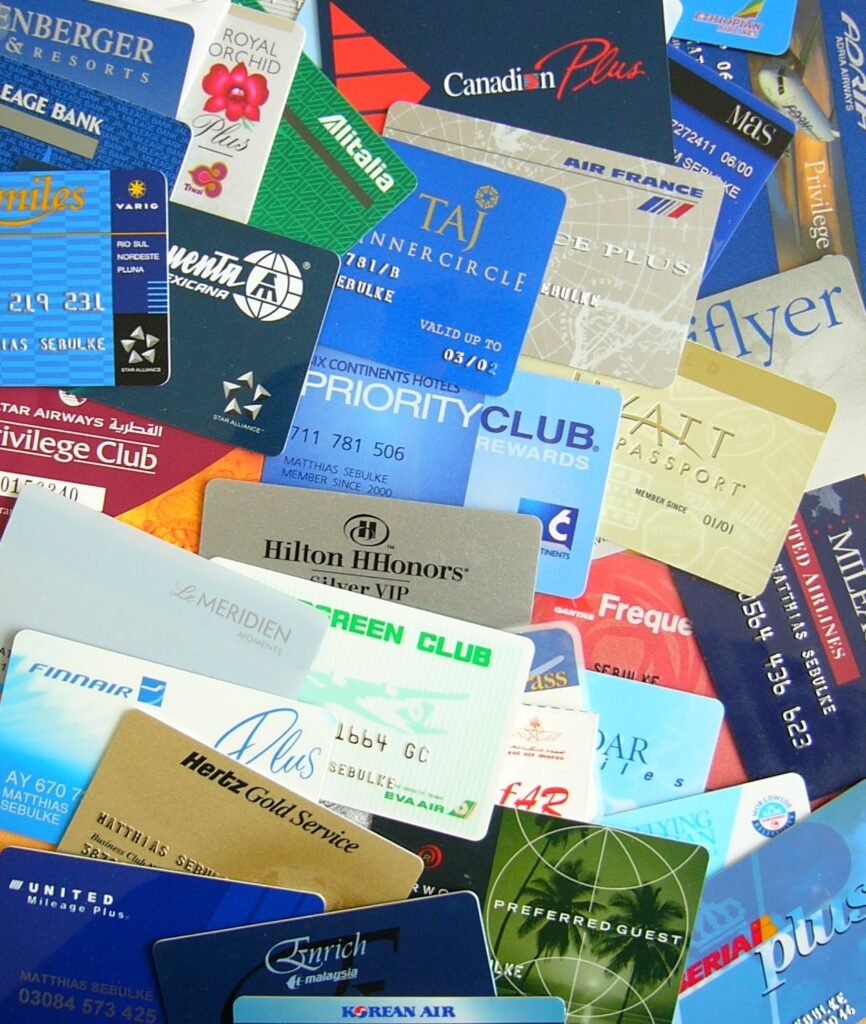
In short: Loyalty programs are engineered marketing systems that condition customers to spend more by rewarding repeat purchases—not to save money, but to lock in long-term spending patterns. The “rewards” you earn are designed to feel like gains while obscuring the total amount you’ve actually spent to earn them. Understanding this mechanism is the first step to using loyalty programs on your terms instead of letting them use you.
The Paradox at the Heart of Every Rewards Program
Loyalty programs promise to reward your loyalty, yet the more faithfully you follow them, the more money leaves your wallet. This isn’t an accident—it’s the entire point.
On the surface, a loyalty program is straightforward: shop at our store, accumulate points, redeem rewards, save money. The logic seems aligned with your interests. You get discounts. The company gets repeat customers. Everyone wins. But this framing obscures a deeper mechanism at work. Loyalty programs are not primarily designed to save you money. They are engineered systems built to change your spending behavior—to make you shop more frequently, spend more per transaction, and remain locked into one brand or retailer even when better alternatives exist elsewhere.
The fundamental mechanism is behavioral conditioning. A loyalty program works by creating a psychological loop: you make a purchase, you receive a reward signal (points accumulate, a status tier progresses, a badge appears), your brain releases dopamine, and you’re incentivized to repeat the behavior. This is the same mechanism that makes slot machines addictive. The reward doesn’t have to be large or even particularly valuable. It simply has to be frequent enough and visible enough to trigger the reward pathway in your brain.
The company running the program knows this. They have invested millions in understanding consumer psychology, behavioral economics, and the neuroscience of decision-making. Every element of the program—the point structure, the redemption thresholds, the visual design of the loyalty card or app, the frequency of reward notifications—is calibrated to maximize repeat purchases. The goal is not to make you feel rewarded. The goal is to make you spend more money than you would have without the program.
This is why loyalty programs have become one of the most powerful tools in modern retail. They are not a cost to the company; they are an investment that generates returns many times over. A customer enrolled in a loyalty program typically spends 20 to 30 percent more annually than a non-member. That increased spending far exceeds the cost of the rewards given out. The math is so favorable that companies now view loyalty programs as essential infrastructure, not optional marketing.
Understanding this paradox—that loyalty programs reward you by extracting more money from you—is the first step toward using these systems strategically instead of being used by them.
How the Reward System Rewires Your Decision-Making
The genius of loyalty programs lies not in the rewards themselves, but in how they alter the way you evaluate purchases. Before loyalty programs became ubiquitous, you made a purchase decision based on a simple calculation: Do I want this product? Can I afford it? Is the price reasonable? After enrollment in a loyalty program, a new variable enters the equation: How many points will I earn?
This shift is subtle but profound. The points themselves have no intrinsic value—they are digital tokens that only matter within the closed ecosystem of the program. Yet your brain treats them as real value. When you see “earn 500 points on this purchase,” your brain doesn’t calculate the actual monetary value of those points (which might be $2.50). Instead, it registers the large number—500—as a gain. This is loss aversion in reverse. You feel like you’re winning.
Retailers exploit this by strategically placing high-point offers on items they want to move. A product that’s overstocked might suddenly offer triple points. A category with low margins might offer bonus points to drive volume. You see the points offer and feel like you’ve discovered a deal, when in reality you’re being nudged toward purchasing decisions that benefit the company’s inventory management, not your wallet.
The tiered loyalty program takes this mechanism further. By creating status levels—bronze, silver, gold, platinum—the program taps into a deeper psychological drive: status seeking. Humans are hierarchical creatures. We care about our position relative to others and relative to our own past performance. A tiered system exploits this by making your loyalty status visible (at least to you) and offering escalating benefits as you climb the ladder.
The effect is powerful. A customer who is bronze-level might see that they’re only $200 away from silver status. Instead of simply shopping as needed, they now have an incentive to spend that $200 to reach the next tier. Once they reach silver, they see that platinum is within reach if they spend another $500. The program has transformed a passive customer into an active participant in a game designed to extract more spending from them.
The company also uses behavioral anchoring to make rewards feel more valuable than they are. If a loyalty member receives a “free” item worth $15, they perceive enormous value—they got something for nothing. The company knows that this $15 item cost them $4 to produce and that the customer had to spend $300 to earn it. But the customer doesn’t do this math. They feel rewarded. They feel like they won.
This is where data collection becomes critical. Every purchase you make in a loyalty program is tracked. The company knows what you buy, when you buy it, how much you spend, and what price points trigger your purchase decisions. This data is used to personalize offers and nudges sent directly to you. You might receive a notification offering double points on the exact product you’ve been browsing online. You might see a special offer on items similar to ones you’ve purchased before. These aren’t coincidences. They are precisely targeted interventions designed to trigger purchases.
The psychological effect accumulates over time. After months or years in a loyalty program, your brain has been reconditioned. Shopping at that retailer without consulting your loyalty account feels incomplete. You’ve been trained to seek the reward signal. The company has successfully embedded itself into your decision-making process.
The Economics: Why Companies Spend Billions on Loyalty
Loyalty programs have become a multi-billion-dollar industry because they deliver measurable returns that far exceed their costs. Understanding the economics reveals why retailers consider them essential and why the programs are designed the way they are.
The basic economics are straightforward. A loyalty program costs a company money to operate: the technology infrastructure, the rewards given out, the marketing to promote enrollment. But the returns are substantial. Research consistently shows that customers enrolled in loyalty programs spend 20 to 30 percent more annually than non-members. For a retailer with millions of customers, this translates to billions of dollars in incremental revenue.
The cost of the rewards themselves is typically 1 to 3 percent of the incremental sales generated. So if a customer spends an extra $1,000 per year because of a loyalty program, and the company gives out $20 in rewards, the return on investment is extraordinary. The company is paying $20 to generate $1,000 in additional revenue. Even accounting for the cost of goods sold, this is highly profitable.
But the financial benefit extends beyond the incremental sales. Loyalty programs also generate data. Every transaction is tracked, tagged, and analyzed. The company learns your preferences, your shopping patterns, your price sensitivity, and your life circumstances. This data is more valuable than the transactions themselves. It allows the company to target you with precision, to predict your future purchases, and to optimize every aspect of their business based on aggregate customer behavior.
Additionally, loyalty programs reduce customer churn. A customer who is enrolled in a loyalty program and has accumulated points or status is less likely to switch to a competitor. The points represent a switching cost—if you leave, you lose the value you’ve accumulated. This is why programs make it difficult to redeem points and why they often expire if unused. The goal is to keep you invested in the system.
Loyalty programs also increase customer lifetime value—the total amount a customer spends with a company over their entire relationship. A customer who shops at a retailer for 20 years generates far more profit than a customer who shops for 5 years. Loyalty programs are designed to extend this relationship. They create habitual purchasing behavior. They make switching costs high. They make the customer feel like part of a community or club.
The most sophisticated loyalty programs use dynamic pricing and personalized offers. Instead of offering the same rewards to all customers, they segment customers by profitability and target offers accordingly. High-value customers might receive premium rewards and exclusive benefits. Lower-value customers might receive minimal rewards or no rewards at all. This maximizes profit by concentrating benefits on the customers who generate the most value.
Some companies have discovered that the best way to increase loyalty program profitability is to make redemption difficult. If points are easy to redeem, customers will redeem them and the company loses revenue. If points are hard to redeem—requiring high point thresholds, offering unattractive redemption options, or creating complex rules around what can be redeemed—customers will keep shopping to accumulate more points. The company profits either way: either the customer never redeems and keeps shopping, or the customer redeems low-value rewards while continuing to shop.
The Turning Point: When Loyalty Programs Become Extraction Mechanisms
Loyalty programs exist on a spectrum. At one end, they genuinely provide value to customers—meaningful discounts, useful rewards, and transparent terms. At the other end, they become sophisticated extraction mechanisms designed to maximize spending while minimizing actual value returned to customers.
The turning point occurs when the company realizes that they can increase profitability by making the program less generous while maintaining customer enrollment. This is when loyalty programs begin to degrade. Point values are reduced. Redemption thresholds are raised. Rewards become less attractive. But because customers have already invested time and effort into the program—they’ve accumulated points, achieved status, integrated the program into their shopping habits—they remain enrolled even as the value proposition deteriorates.
This is the dark side of behavioral conditioning. Once you’ve been trained to seek the reward signal, you continue seeking it even when the rewards become less valuable. The company has successfully changed your decision-making process. You now shop at their store partly because of rational calculation (the rewards are valuable) but increasingly because of habit and the psychological satisfaction of accumulating points.
A classic example of this degradation is when a company reduces point values across the board. What previously earned 5 points per dollar now earns 2 points per dollar. The redemption thresholds remain the same, so you now have to spend 2.5 times as much to earn the same reward. But you don’t necessarily notice this happening. The change is gradual. You’re still accumulating points. The app still shows your progress toward the next reward. You continue shopping.
Another degradation mechanism is the introduction of “premium” tiers that require very high spending to access. The company offers elite benefits—higher point multipliers, exclusive products, concierge services—but only to customers who spend $5,000 or more per year. This creates a new status hierarchy and a new incentive to spend more. For the vast majority of customers who can’t reach elite status, the program feels less rewarding than before. But they remain enrolled because they’ve already invested in the program and because the alternative—not shopping there—means losing the points they’ve accumulated.
The company also exploits the sunk cost fallacy. Once you’ve accumulated 8,000 points toward a 10,000-point redemption, you’re unlikely to abandon the program because you’d lose the 8,000 points you’ve already earned. You’ll keep shopping at that retailer to reach the redemption threshold, even if a competitor offers better prices or products. The company has successfully trapped you in a system where walking away feels like a loss.
This is where loyalty programs transition from a mutually beneficial arrangement to an extraction mechanism. The company is no longer trying to maximize your satisfaction with the program. They’re trying to maximize the amount you spend while minimizing the value you receive. The program continues to exist because it’s profitable, not because it’s generous.
The turning point is rarely announced. There’s no memo saying “we’re now going to extract more value from you.” Instead, it happens gradually through dozens of small changes: reduced point values, raised redemption thresholds, expired points, restricted redemption options, reduced sign-up bonuses, increased annual fees for premium tiers. Each change is small enough that individual customers might not notice. Collectively, they transform a generous program into an extraction mechanism.
The Hidden Costs of Loyalty: What the Numbers Don’t Show
The most insidious aspect of loyalty programs is that they obscure the true cost of your spending. When you earn points or achieve status, you feel rewarded. But this feeling masks the underlying reality: you’re spending more money than you would have without the program.
Consider a simple example. You shop at a grocery store that offers a loyalty program with a 5 percent discount on select items for members. You enroll and start shopping there regularly. Over the course of a year, you accumulate $100 in rewards. You feel like you’ve saved money. But if you track your actual spending, you’ll likely discover that you’ve spent 15 to 20 percent more than you did before enrolling. You’ve spent an extra $300 to earn $100 in rewards. The net effect is that the loyalty program cost you $200.
This happens because of several mechanisms working simultaneously. First, the loyalty program encourages you to shop more frequently. You make an extra trip to the store to earn bonus points on a specific promotion. Second, it encourages you to buy more per transaction. You add items to your cart because they’re offering double points. Third, it reduces your price sensitivity. You’re willing to pay slightly more for a product because you’ll earn points on it. Fourth, it creates a psychological anchor around the store. You’ve mentally designated this as “your” store, so you shop there even when competitors offer better prices.
The company knows all of this. They’ve calculated that the cost of the 5 percent discount is far less than the incremental revenue generated by the increased shopping frequency and higher transaction values. They’re willing to give you $100 in rewards because you’ve given them $300 in extra spending.
Another hidden cost is the data you’re providing. Every purchase in a loyalty program is tracked and analyzed. The company learns your preferences, your household composition, your income level (inferred from your purchases), your health status (what you buy reveals health information), and your personal values. This data is valuable. It’s sold to third parties, used for targeted advertising, and analyzed to predict your future behavior. You’re not just paying with money; you’re paying with your personal information and privacy.
There’s also the opportunity cost. The time you spend managing your loyalty program accounts—checking your points balance, looking for redemption options, reading promotional emails—is time you could spend on something else. If you’re enrolled in 10 loyalty programs and spend 5 minutes per week managing them, that’s 2,600 minutes per year, or over 43 hours. That time has value. If you value your time at even $20 per hour, the opportunity cost is $860 per year.
The psychological cost is harder to quantify but no less real. Loyalty programs create decision fatigue. Every purchase becomes more complex because you have to consider the loyalty implications. They create anxiety about redemption deadlines and expiring points. They create regret when you discover you could have earned more points by shopping elsewhere. They create status anxiety if you’re trying to reach a higher tier. These psychological costs accumulate and affect your overall well-being and decision-making quality.
Perhaps the most significant hidden cost is the lock-in effect. Once you’re enrolled in a loyalty program, you’re less likely to explore alternatives. You might not notice that a competitor offers better prices because you’re focused on maximizing your points at your current retailer. You might not try a new store because you’d lose the loyalty benefits you’ve accumulated. The program has reduced your market efficiency
Frequently Asked Questions
Do loyalty programs actually save you money?
Not necessarily. While they offer discounts or rewards, they’re designed to encourage more frequent purchases and higher spending overall. Most customers spend more to earn rewards than they would have without the program. The psychological value of “free” rewards often outweighs the actual financial benefit.
Why do companies invest billions in loyalty programs?
Because they work as customer retention tools. Loyalty programs lock customers into repeat purchases, increase customer lifetime value, and generate behavioral data. A customer enrolled in a loyalty program typically spends 20-30% more annually than non-members, making the investment highly profitable for retailers.
What’s the difference between a points system and a tiered loyalty program?
Points systems reward individual transactions and can be redeemed for discounts or products. Tiered programs (bronze, silver, gold) create status hierarchies that encourage higher spending to reach premium levels. Tiered systems are psychologically more powerful because they tap into both financial incentives and social status.
How can I use loyalty programs without overspending?
Treat loyalty programs as a tax on spending you were already planning to do. Only enroll if you genuinely shop at that retailer regardless of rewards. Set a spending budget before enrolling, track what you actually spend versus what you earn, and resist the urge to make additional purchases just to reach redemption thresholds.