
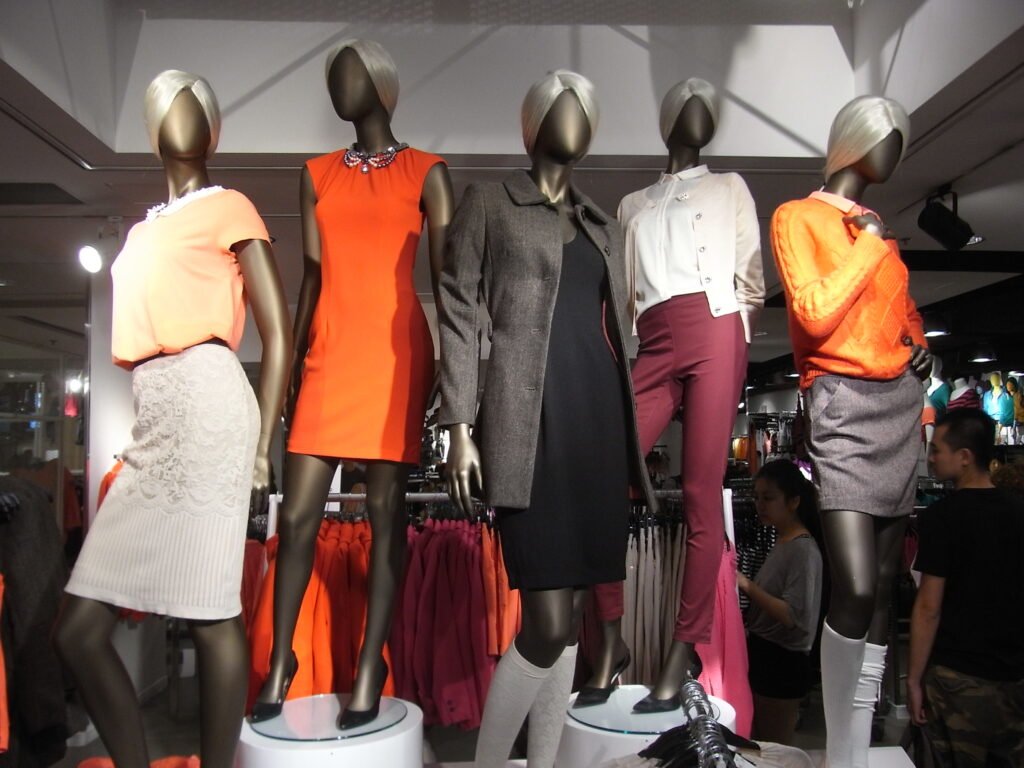
In short: Fast fashion has engineered a culture of disposability by rapidly replicating trends at low cost, producing a market that now accounts for 36% of global clothing sales and $178 billion annually. Legal scrutiny over labor abuse, hazardous materials, greenwashing, and IP infringement underscores the industry’s ethical and environmental failings, prompting consumers to demand more sustainable choices.
Rise
The paradox that propelled fast fashion into the spotlight is that luxury has always been about exclusivity, yet its most profound influence comes from ubiquity. In the early 2000s, the textile industry witnessed a seismic shift as multinational retailers—H&M, Zara, Primark, and newer entrants like Shein—introduced a business model that mirrored the rapid trend cycles of runway shows but at a fraction of the cost. By integrating design, production, and distribution into a single, highly responsive supply chain, these firms could bring a new್ಠ garment from concept to store in as little as six weeks. This speed, coupled with aggressive pricinggever, created a surge in demand that, by 2026, accounts for 36 % of worldwide clothing purchases and drives an annual sales volume of approximately $178 billion.
At the heart of the rise was the democratization of fashion. Consumers, no longer confined to the high‑end boutiques, could now access runway‑inspired styles with a wallet‑friendly price tag. The industry leveraged low‑cost manufacturing hubs in Asia and the Middle East, where labor was inexpensive and regulations were lax. This combination of speed, scale, and cost allowed brands to produce vast inventories, კa fostering a culture where new(seconds) replaced the old with a frequency that left garments on the shelf for mere weeks before they were deemed out of style.
Technological integration played a pivotal role. Advanced data analytics enabled brands to track social media trends and predict which silhouettes would resonate with consumers. Digital platforms, particularly mobile apps and e‑commerce sites, provided instant access to new releases, reinforcing the cycle of rapid consumption. By 2015, the model had scaled globally, with fast fashion retailers having a presence in more than 90 countries. Their influence reshaped the apparel market, positioning trend replication as the new norm and setting the stage for the industry’s peak.
Peak
Fast fashion’s apex was marked by a combination of omnichannel retailing, aggressive marketing, and a relentless push for novelty. Brands such as Zara and H&M introduced new collections every 10‑12 weeks, and their online platforms mirrored the cadence of physical stores, offering up‑to‑date inventory at all times. The resulting consumer behavior shifted toward “fashion as a service,” where individuals sought constant novelty rather than durability.
During this period, the industry’s environmental footprint grew exponentially. Textile production released approximately 10 % of global carbon emissions, and fast fashion contributed to a surge in textile waste—about 92 million tons were discarded in 2020, a figure projected to rise without intervention. Additionally, the overuse of hazardous dyes and chemicals, often used to accelerate production timelines, led to severe health risks for workers in developing countries. Reports frantic that workers in garment factories were exposed to toxic substances exceeding permissible limits, raising alarms about occupational safety.
Legal scrutiny intensified as well. In 2022, the European Union imposed fines on several fast fashion companies for labor violations, citing forced overtime and unsafe working conditions. In the United States, the Department of Labor brought lawsuits against brands for wage theft and inadequate safety protocols. Intellectual property disputes also surfaced, with brands accused of copying designs from independent artists without compensation. These legal battles highlighted the ethical and regulatory challenges embedded in the business model, yet the allure of low prices and rapid trend cycles kept consumer demand high.
Turning Point
The turning point emerged when consumer awareness and activism began to outpace the industry’s complacency. High-profile documentaries and investigative journalism exposed the human cost of cheap apparel, sparking a global conversation about sustainability. The rise of social media influencers and activist groups amplified these messages, leading to a measurable shift in purchasing behavior.
Companies faced mounting pressure to adopt transparent supply chains and sustainable practices. Zara’s 2024 sustainability report assay that it would reduce carbon emissions by 30 % by 2030, while Shein announced a “zero‑waste” initiative aimed at eliminating textile waste from its production processes. Despite these commitments, many critics argue that the measures fall short of the systemic change required, citing ongoing reliance on cheap labor and continued production of non‑durable garments.
Governmental policy responses further accelerated the shift. Several European nations introduced “clothing taxes” on fast fashion importsonaut to incentivize consumers to buy locally and sustainably. In the United States, the 2025 Federal Trade Commission launched an enforcement campaign targeting greenwashing claims by fast fashion brands, holding companies accountable for false environmental statements. These regulatory moves, coupled with shifting consumer values, signaled a pivotal moment where the fast fashion model faced existential scrutiny.
Fall
Fast fashion’s decline is now unfolding on multiple fronts. The industry’s reliance on overproduction is increasingly unsustainable both environmentally and economically. Textile waste has reached a tipping point, with landfill capacities strained and recycling infrastructure lagging behind. The carbon footprint of producing a single garment—often less than $5—continues to drive global climate change, prompting governments to implement stricter emissions standards for apparel producers.
Moreover, the labor landscape is shifting. Workers in garment factories are organizing unions and demanding fair wages and safer conditions. In 2025, a landmark agreement between a major fast fashion brand and an international labor organization raised wages for workers in Bangladesh by 20 %. While the move was celebrated, it also demonstrated the increasing cost of compliance, forcing brands to re-evaluate the economics of rapid, low‑margin production.
Consumer habits have also evolved. The rise of circular fashion platforms—such as resale apps and subscription services—has created viable alternatives to buying new. These platforms not only extend garment lifespans but also challenge the narrative that “new is better.” As a result, fast fashion’s market share is projected to shrink, with the global apparel market shifting toward sustainable and ethicalopathic brands. The decline is not a sudden collapse but a gradual realignment toward more responsible consumption.
Lesson
The hard truth fast fashion has taught us is that profit cannot coexist with sustainability when the business model is built on disposability. For consumers, the lesson is actionable: prioritize quality over quantity, support brands that demonstrate transparent and ethical supply chains, and participate in garment recycling programs. For businesses, the imperative is to redesign products for longevity, invest in responsible sourcing, and transparently report environmental impacts. Only by aligning economic incentives with ecological stewardship can the apparel industry evolve beyond its disposable past.
Conclusion
Fast fashion’s rise, peak, viewpoint, and decline illustrate a broader economic cycle—innovation, expansion, scrutiny, and transformation. The industry’s legacy is a cautionary tale: rapid growth fueled by cheap labor, environmental neglect, and legal controversies can only be sustained until the inevitable backlash from consumers, regulators, and the planet itself. The future of fashion depends on a collective shift toward durability, transparency, and respect for workers and the environment. By choosing to purchase less, repair more, and support ethical brands, consumers become the catalyst for this necessary change.
Frequently Asked Questions
What defines fast fashion?
Fast fashion is a business model that quickly turns runway trends into mass‑produced, affordable apparel, emphasizing speed and cost over durability.
Which brands are the biggest fast fashion players?
Major players include Shein, H&M, Zara, C&A, Primark, ASOS, and others that dominate the 36% share of global clothing sales.
What legal challenges do fast fashion companies face?
They face lawsuits and regulatory action for labor exploitation, use of hazardous chemicals, environmental greenwashing, and intellectual property violations.
How can consumers reduce the impact of fast fashion?
Choose higher quality, buy less, repair, support transparent brands, and recycle garments to shift demand toward sustainability.