
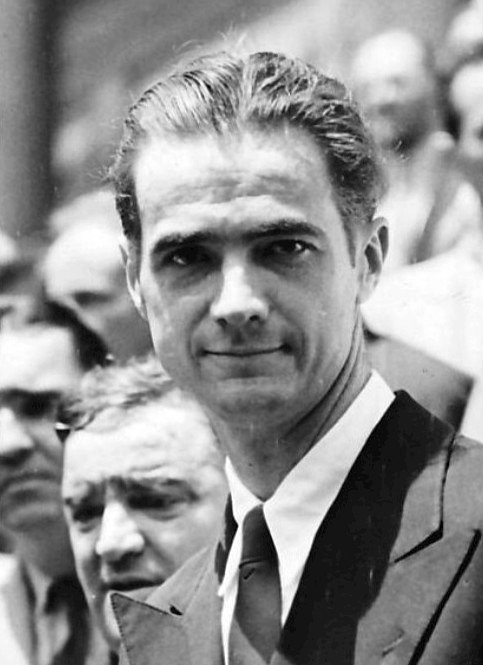
In short: Howard Hughes built a fortune that spanned Hollywood and aviation, then lost it to obsessive‑compulsive disorder and a life of reclusiveness. His story is a cautionary tale of brilliance unchecked by health, showing how unchecked ambition can erode the very foundations it lifts.
Rise
Howard Robard Hughes Jr. was born on December 24, 1905, in Houston, Texas, into a family that already possessed a modest degree of wealth. By the late 1920s, Hughes had moved to Hollywood, where he leveraged his father’s fortune and sharp business instincts to produce high‑budget, high‑risk films. The 1930 release of “Hell’s Angels” showcased his willingness to invest heavily in cutting‑edge technology—an approach that would later define his aviation ventures. Within a decade, Hughes owned a controlling stake in RKO Pictures, one of the Big Five studios, and his reputation as a shrewd financier grew. The success of these films injected Hughes with the capital and confidence to pursue more ambitious projects beyond the silver screen.
In 1932, a pivotal moment arrived when Hughes founded Hughes Aircraft Company. He applied the same relentless drive that had propelled his Hollywood career to the realm of aviation. The company quickly set records for speed and altitude, and Hughes personally piloted the 1935 H‑1 Racer to a world speed record of 446 miles per hour. His ambition extended beyond small aircraft; Hughes envisioned a future where aviation would dominate global transportation, leading him to develop larger, more complex machines. The 1937 launch of the Hughes H‑8, a twin‑jet fighter, marked a significant milestone, proving that Hughes could translate vision into tangible engineering achievements.
Hughes’s rise was not only financial but also cultural. He was a figure of fascination and fear, known for his eccentric behavior and his penchant for secrecy. By the late 1930s, he had amassed a fortune that placed him among the world’s richest men. He began to diversify into other industries—particularly airlines—establishing Trans World Airlines in 1941 to secure a foothold in commercial aviation. His acquisition of Air West in 1965, renaming it Hughes Airwest, cemented his status as a dominant player in the airline industry. Hughes’s empire was a blend of film, aviation, and business ventures, all driven by his relentless pursuit of innovation.
Peak
Hughes’s peak years were defined by an unprecedented combination ofimentu of the era’s technological and cultural milestones. In 1944, he completed the H‑12 “Hughes H‑1 Racer” that set new altitude records, and he used that same platform later to build the H‑4 Hercules, the largest flying boat ever constructed. Though the Spruce Goose only flew once, it captured the public imagination and cemented Hughes’s reputation as a pioneer who could turn ambition into reality.
In 1948, Hughes acquired RKO Pictures, a move that signified the height of his influence in both the film and aviation industries. The acquisition was more than a business transaction; it was a statement that Hughes could dominate two of America’s most glamorous industries. However, RKO struggled under his control, ultimately ceasing operations in 1957. Despite this.Utilities, Hughes continued to command significant influence across multiple sectors, including real estate, casinos, and media holdings in Las Vegas. His involvement in the transformation of Las Vegas, turning it from a rough town into a more cosmopolitan hub, showcased his business acumen beyond the skies.
The 1950s and early 1960s were also a time when Hughes received numerous accolades for his contributions to aviation. He was awarded the Harmon Trophy twice, in 1936 and 1938, for his record‑breaking flights. In 1938, he received the Collier Trophy, and in 1939, the Congressional Gold Medal, all for his achievements during a decade of remarkable technological progress. In 1973, he was inducted into the National Aviation Hall of Fame, a fitting acknowledgement of a career that redefined the boundaries of flight. Hughes’s peak”]);
Turning Point
The turning point of Hughes’s life began in the mid‑1950s as his health and mental wellbeing began to deteriorate. A near‑fatal plane crash in 1947 left him with chronic pain and a lingering sense of vulnerability. The physical injuries were compounded by a progressive hearing loss that left Hughes increasingly isolated. The combination of pain, deafness, and a developing obsessive‑compulsive disorder (OCD) began to erode his capacity to manage the sprawling empire he had built.
As Hughes’s OCD intensified, his behavior became increasingly erratic. He developed compulsions such as avoiding contact with people and obsessing over cleanliness and order. These compulsions manifested in extreme measures, including refusing to eat certain foods and avoiding eye contact with anyone he didn’t know. The reclusive nature of his later years left many of his investments unattended and his businesses vulnerable to mismanagement. In 1959, Hughes sold off his stake in RKO, a decision that signaled the beginning of the unraveling of his empire.
By the early 1960s, Hughes’s financial empire began to fracture. He faced lawsuits and scrutiny over his business practices, and many of his holdings deteriorated without his personal oversight. The decline was further accelerated by his refusal to engage with the public or to allow journalists to interview him. Hughes’s reclusiveness became a public spectacle, and his name was increasingly associated with eccentricity rather than entrepreneurship. In 1969, he withdrew from the public eye entirely, shuttling between a private residence and his secluded San Francisco apartment, a setting that would become his final sanctuary.
Fall
Hughes’s fall was a gradual process that culminated in his death on April 5, 1976, from kidney failure. The institutions he once commanded, including Hughes Aircraft and Hughes Airwest, eventually fell under new ownership or were absorbed by larger corporations. The once‑mighty H‑4 Hercules was never regarded as a commercial success, and the Spruce Goose, though a marvel, only flew once, becoming more of a symbol of hubris than a viable asset.
Financially, Hughes’s empire never fully recovered from the loss of his visionary leadership. The conglomerate he had built was fragmented, with his assets sold off in pieces. The legacy of his business ventures is now largely a historical footnote, remembered more for the audacity of his projects than for their profitability. The Howard Hughes Medical Institute, founded through his wealth, stands as a testament to the more philanthropic side of his legacy, but it is a small fraction of the colossal empire that once existed.
Personal decline was equally catastrophic. Hughes’s obsessive‑compulsive disorder, chronic pain, and deafness isolated him socially and professionally. He became a recluse, rarely leaving his home, and his business operations were left to a network of managers bassist 1980. The combination of mental illness and the lack of a robust succession plan meant that his empire could not sustain itself after his passing. Thus, from the zenith of global influence, Hughes fell into obscurity, leaving behind a complex legacy that oscillated between innovation and self‑destruction.
Lesson
Howard Hughes’s story is a stark reminder that extraordinary wealth and influence are fragile when not balanced with personal well‑being and a sustainable governance structure. His success was rooted in vision and relentless execution, but his downfall was precipitated by neglecting his health and failing to delegate authority. For entrepreneurs and leaders, the practical takeaway is to prioritize mental and physical health as integral to long‑term success and to establish transparent, resilient systems that can thrive independent of a single individual’s presence. By doing so, leaders can ensure that their legacy endures beyond their own tenure and that their enterprises remain adaptable in the face of personal or external challenges.
—
Frequently Asked Questions
How did Howard Hughes first become wealthy?
Hughes began in Hollywood, producing big‑budget films like “Hell’s Angels” and “Scarface.” His creative control and business acumen grew a substantial fortune before he turned to aviation.
What was Hughes Aircraft’s most famous airplane?
The Hughes H‑4 Hercules, known as the Spruce Goose, was the largest flying boat ever built. Though it only flew once, it symbolized Hughes’s ambition and technical prowess.
Why did Hughes lose his business control?
Chronic pain, deafness, and obsessive‑compulsive disorder led Hughes into a reclusive lifestyle. His deteriorating mental health made it impossible to manage his vast holdings, causing many assets to fade or be sold.
What legacy does Hughes leave today?
Hughes’s name lives on through the Howard Hughes Medical Institute, his former casino holdings, and the historical record of his daring innovations in film and aviation.